Archives

Madison Square North, Manhattan

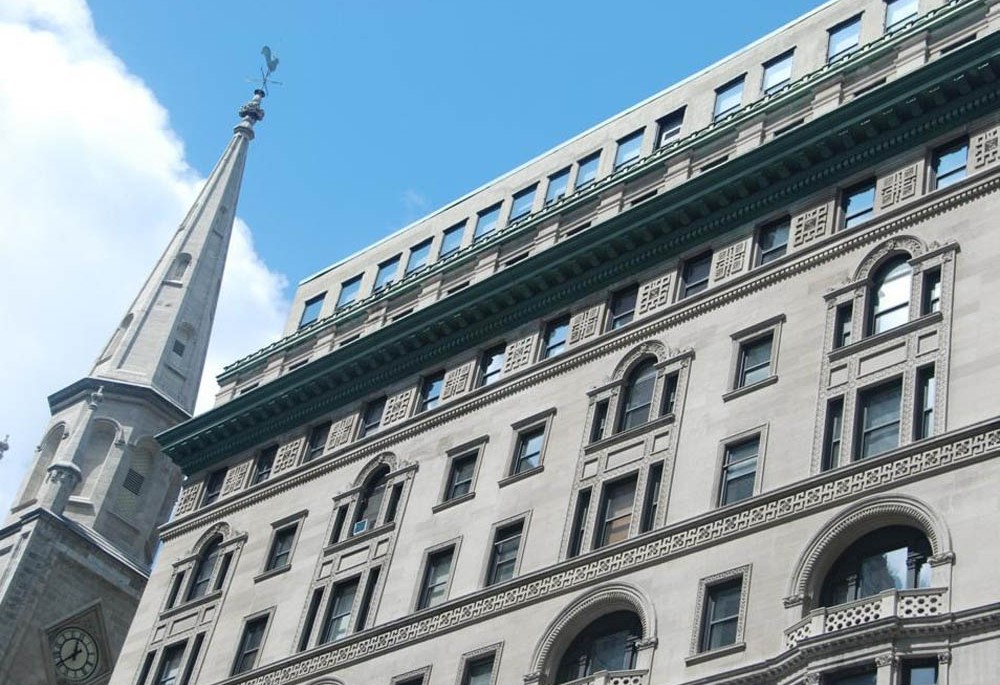
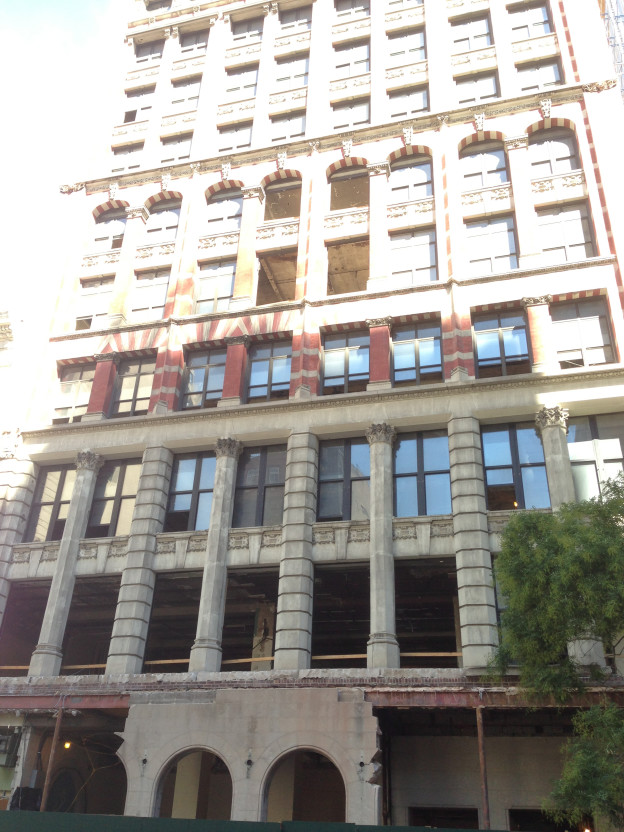
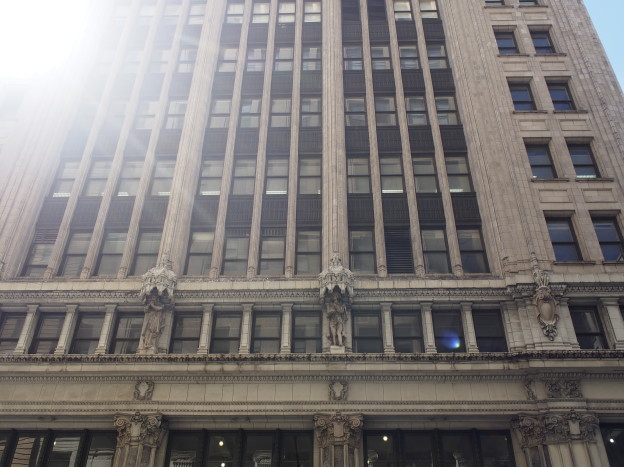
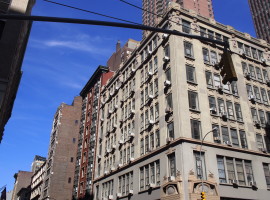
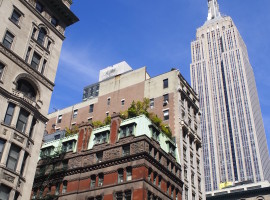
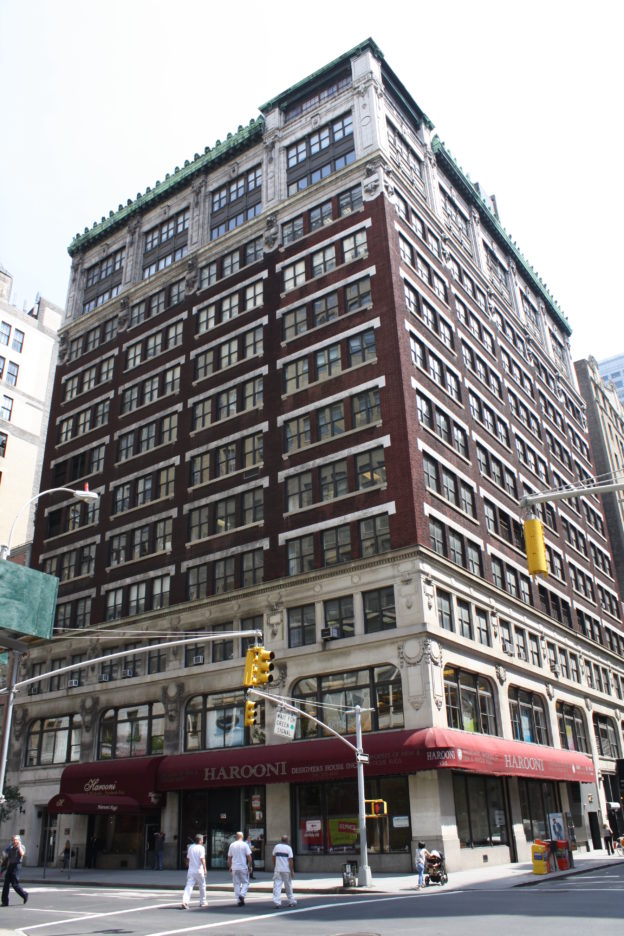
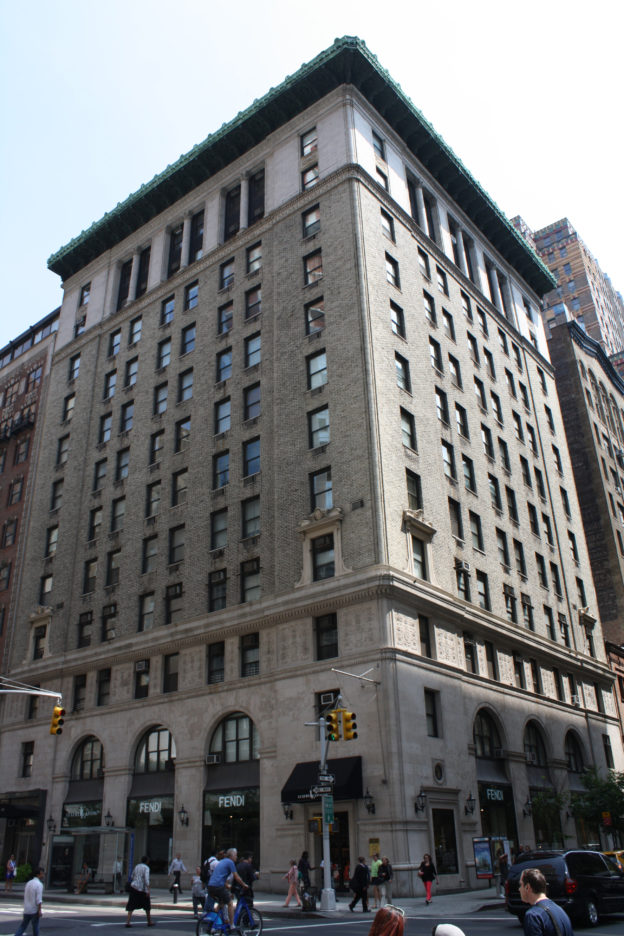
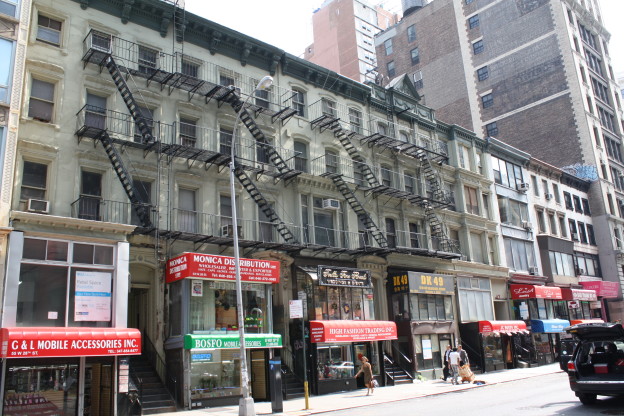
Unlike other parts of Midtown, one can still experience the full flavor of this neighborhood’s evolution from a residential enclave into an entertainment district anchored by Madison Square Garden, and later to one of the nation’s most important mercantile centers before WWI. At this time, only a small portion of this area west and north of Madison Square is protected as a historic district.

To read more about the Madison Square North click here

Landmarks Committee of Community Board 5 – Hearing for expanded Madison Sq North District

Dear Friends and Neighbors,
The 29th Street Neighborhood Association-ISN urgently needs your help.
On Tuesday, March 31st, the Landmarks Committee of Community Board 5 (CB5) will hold a hearing on our proposal to expand the current North of Madison Square Historic District

WE URGENTLY NEED SUPPORTERS
TO FILL THE HEARING ROOM

We expect a lot of negative testimony from real estate developers. It’s critical that we demonstrate as much support as possible for our proposal, because if this Committee doesn’t vote to approve our proposal on Tuesday, and if their recommendation isn’t strong enough for the CB5 full board to vote to approve this on April 7, that’s it. It’s over.

Please come if you have any interest in the future of this neighborhood —we just need as many bodies in as many chairs as we can mobilize. It is REALLY critical that we pack the room with supporters Bring a friend (or several). The committee wants to see that there is support from the community to expand this historic district. The destruction of our neighborhood will continue to surround us if we can’t get this done.


Here is the info from CB5:

Landmarks Committee

TUESDAY, March 31, 2015  at 6:00 pm

LOCATION:  Xavier High School,30 West 16th Street,  2nd Floor Library

Layla Law-Gisiko, Chair
Renee Cafaro, Vice Chair

Agenda:

  • Presentation of the ongoing restoration at St. Patrick’s Cathedral
  • Proposal for the expansion of the Madison Square North Historic District, down to 24th St and up to 34th St b/t 6th and Park Avenues
  • 4 West 19th Street, application for façade renovations.
  • 375 Park Avenue, The Four Seasons, application for restoration and alterations.
  • 100 5th Avenue, Eddie Bauer, application for a proposed ADA compliant exterior ramp and two illumi


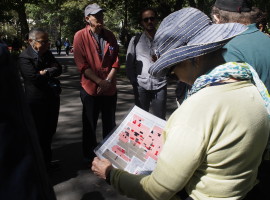
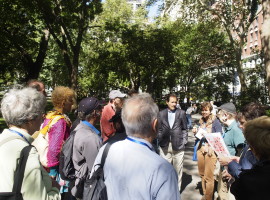
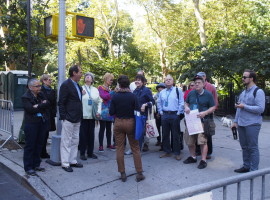
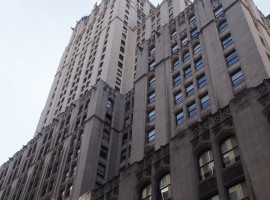
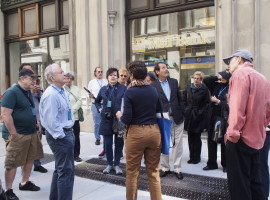
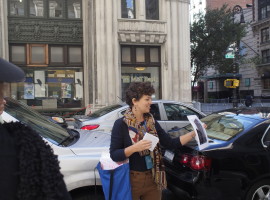
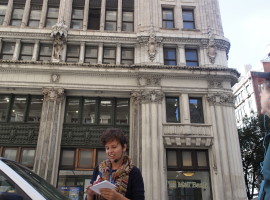
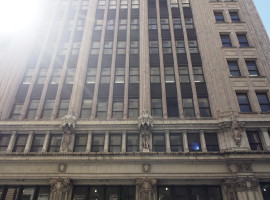
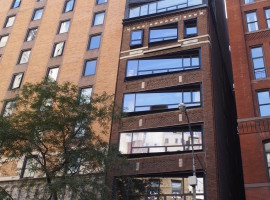
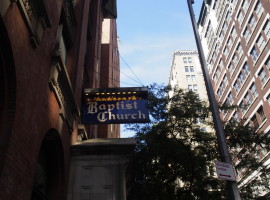
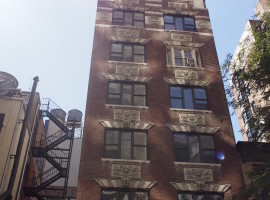
Madison Square North, Manhattan Tour Pictures

Madison Square North, Manhattan
Sunday, September 14, 11:00AM (WALKING TOUR)

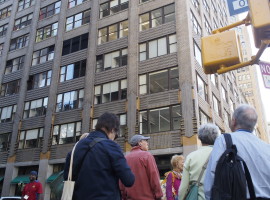
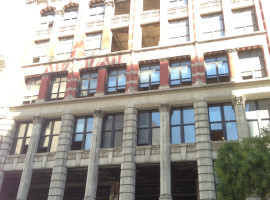
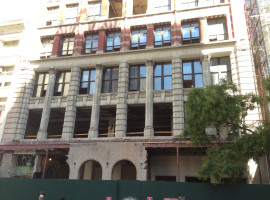
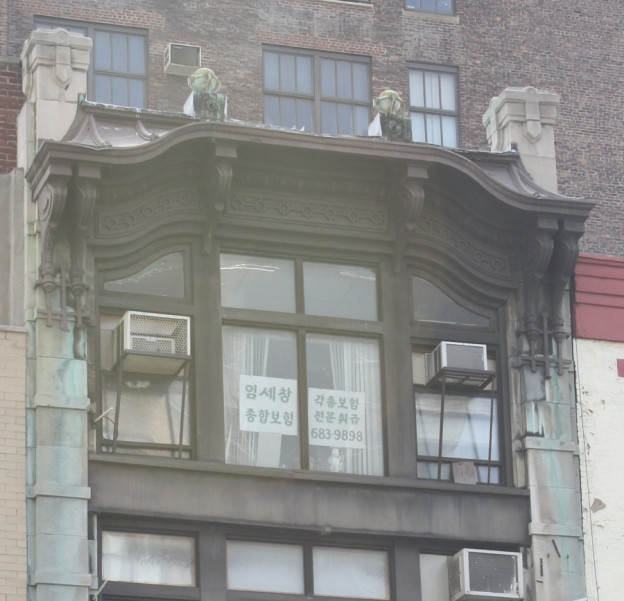
This architecturally diverse neighborhood includes pre-Civil War rowhouses, late 19th century hotels, early 20th century loft and commercial structures, and the remaining buildings of the famous Tin Pan Alley. To better reflect the neighborhood’s boundaries, local residents and advocates have submitted a Request for Evaluation to the Landmarks Preservation Commission to expand the Madison Square North Historic District. HDC Board member and Madison Square North expert Marissa Marvelli led the walking tour of this fascinating neighborhood.

9 West 29th Street, 11 West 29th Street, 13-15 West 29th Street

c. 1857; altered: John B. Snook & Sons, 1900-01;
c. 1859; altered: John B. Snook & Sons, 1902;
c. 1859|

The Italianate rowhouses at numbers 11, 13 and 15 West 29th Street were all built for the same client, George Greer, in the mid-19th century. In 1900, numbers 13 and 15 were joined into one structure. Number 11, which was altered with stores and show windows in 1902, was the first home of the American Geographical Society. Number 9 was originally constructed as a rowhouse, but subsequently functioned as a clubhouse and meeting place for members of the Bar Association. The structure was altered with the present Renaissance Revival style cast-iron façade in 1900.

36 West 25th Street

George F. Pelham;
1912|

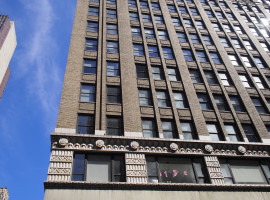
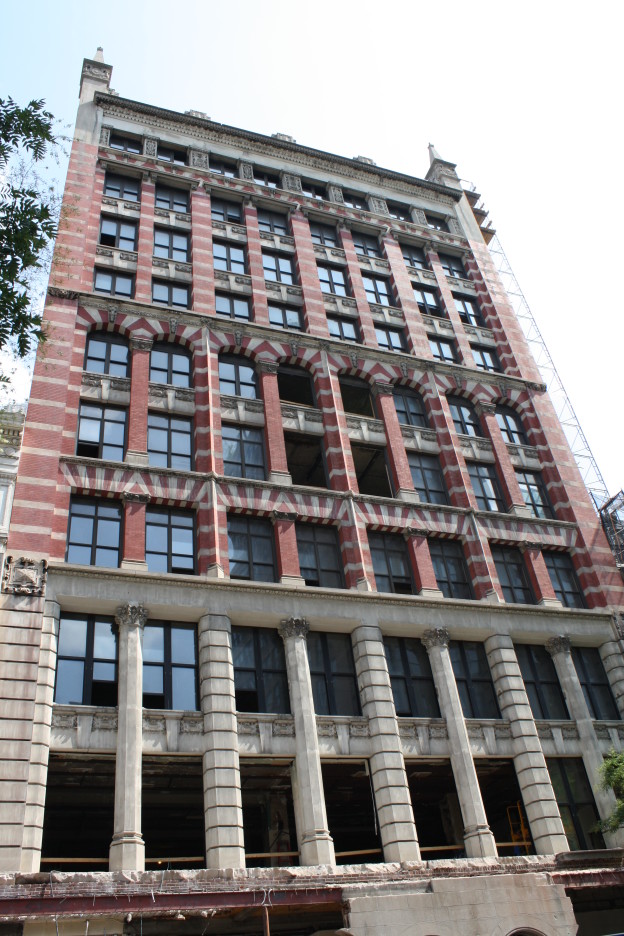
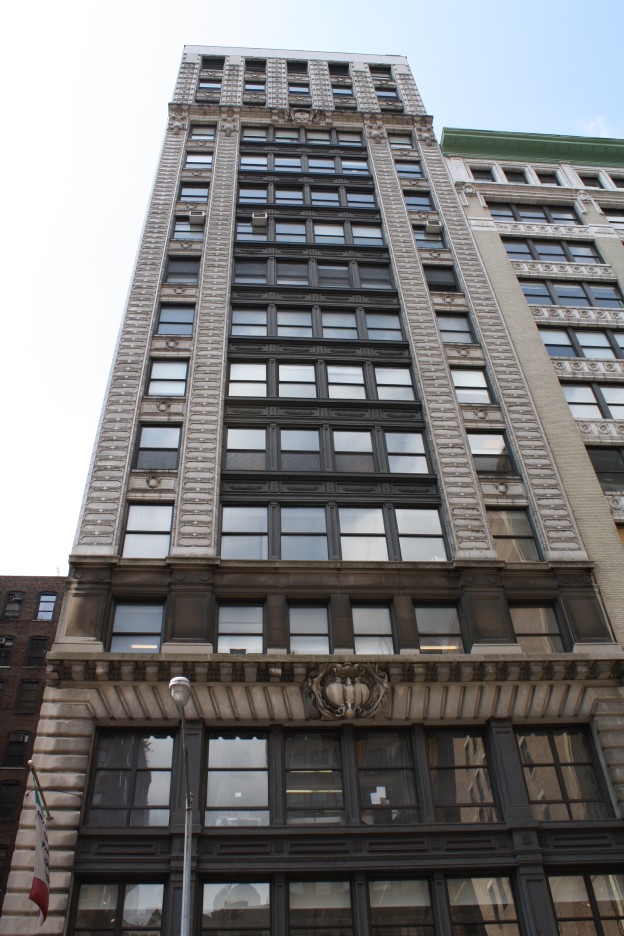
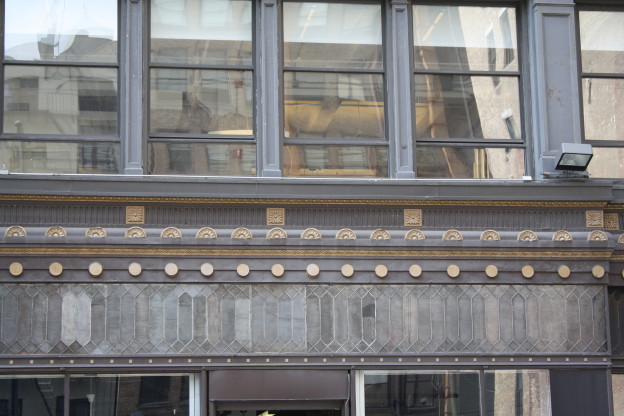
This 16-story loft building was designed in the Renaissance Revival style, and stands out on the block for its richly ornate façade and intact storefront details. The first three floors of the building form its base, with a rusticated enframement, metal window articulation and a dentilled cornice with a large central cartouche at its crown. The ground floor storefront features a leaded glass transom surmounted by a cornice with rosettes and half-sunburst patterns. The upper stories are equally ornate, with four central metal bays and molded vertical piers of terra-cotta running up the length of the building. Another grand cornice with brackets and cartouches sits above the 13th floor.

105 Madison Avenue

Buchman & Fox;
1912-13|

Like Madison Square Park, Madison Avenue was named after James Madison, the fourth President of the United States. The Avenue begins at 23rd Street and extends to the Madison Avenue Bridge at 138th Street. When the Manhattan street grid was mandated in 1811, there was no avenue between Fourth (now Park) and Fifth Avenues. Madison Avenue was carved out in the 1840s due to the wide distance between Fourth and Fifth Avenues and in order to create more building lots with avenue frontage. This southern section of Madison Avenue is characterized by its fine assortment of large-scale hotels, lofts and office buildings.

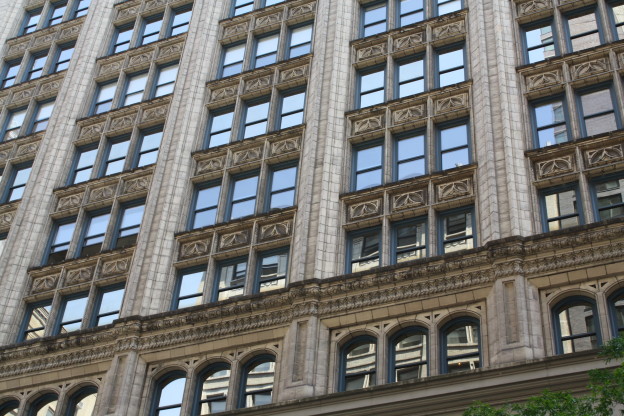
The imposing store and loft building is clad entirely in terra-cotta, much like Cass Gilbert’s famed Woolworth Building, which was constructed at the same time. At 20 stories tall, it has a strong presence on Madison Avenue. The structure features Gothic Revival style ornament, with grand arches at the ground level and at the crown.

830 Sixth Avenue

Oscar Lowinson;
1908-09|

Walking north on Sixth Avenue, a modest, but striking, commercial building stands out on its east side. 830 Sixth Avenue was originally a two-family dwelling, but was converted to lofts for light manufacturing and given a new façade in the Beaux-Arts/Art Nouveau style. Its noteworthy architectural features include an elegant entrance and curving cornice.

Marble Collegiate Church

272 Fifth Ave;
Samuel Warner;
1851-54|

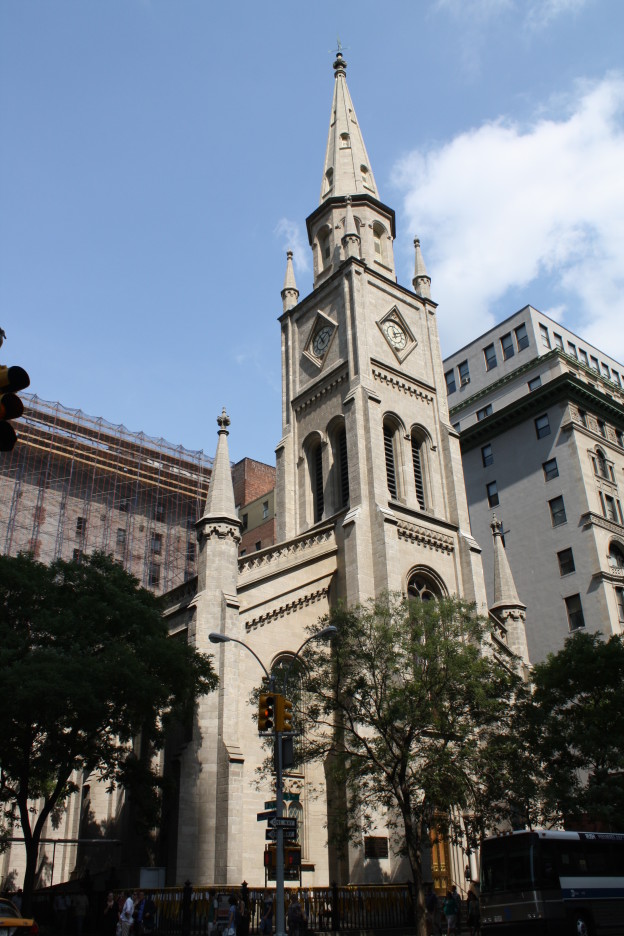
Marble Collegiate Church contains components of several architectural styles, resembling a Colonial wood frame church in its form, but with Gothic and Romanesque Revival style details. The symmetrical marble edifice, which gives the church its name, features an impressive central tower with a belfry, clock and octagonal spire, as well as Romanesque arches, molded cornices and octagonal turrets on its façades. Marble Collegiate Church was designated a New York City Landmark in 1967.

St. Anthony Club

East of Madison on East 28th Street;
James Renwick, 1879; alterations: J. A. Moore, 1899 and 1918|

Like Madison Square Park, Madison Avenue was named after James Madison, the fourth President of the United States. The Avenue begins at 23rd Street and extends to the Madison Avenue Bridge at 138th Street. When the Manhattan street grid was mandated in 1811, there was no avenue between Fourth (now Park) and Fifth Avenues. Madison Avenue was carved out in the 1840s due to the wide distance between Fourth and Fifth Avenues and in order to create more building lots with avenue frontage. This southern section of Madison Avenue is characterized by its fine assortment of large-scale hotels, lofts and office buildings.

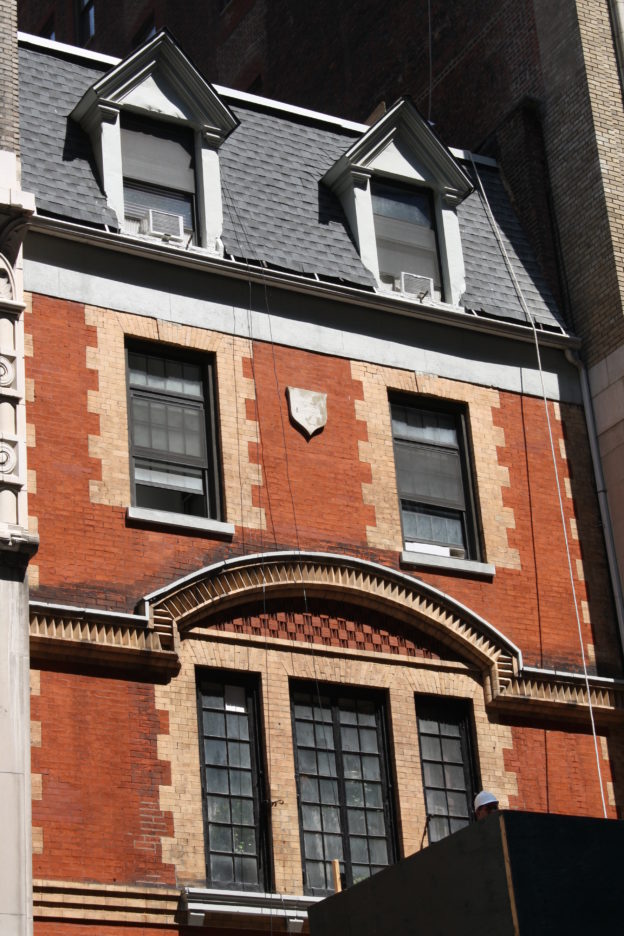
The St. Anthony Club, a Renaissance-inspired building that originally had a pyramidal roof that was removed when an extra one and a half stories were added in 1899. The red and yellow brick building was constructed for Columbia University’s Delta Psi fraternity and literary society, which occupied the building until 1912.

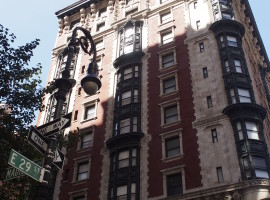
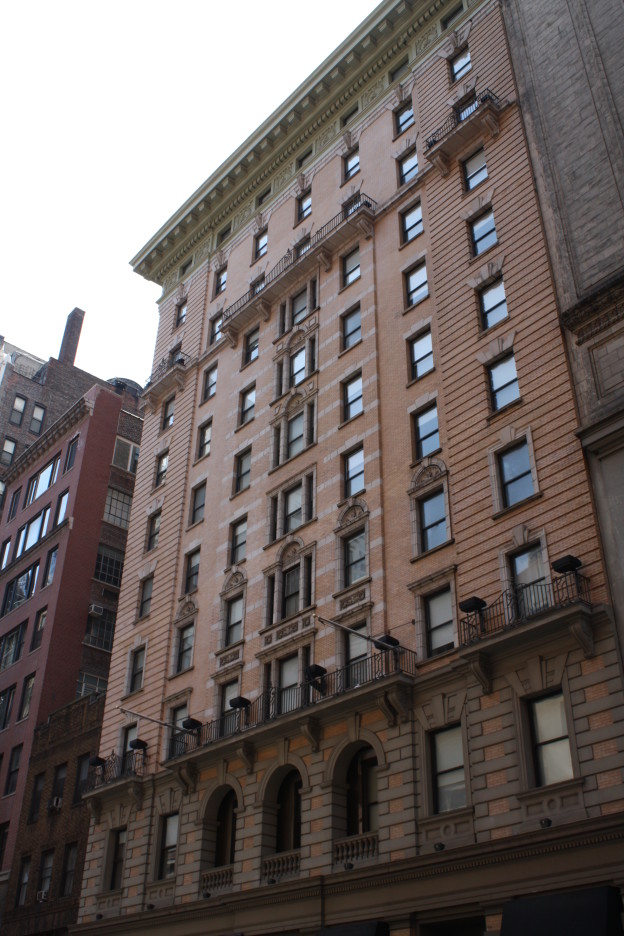
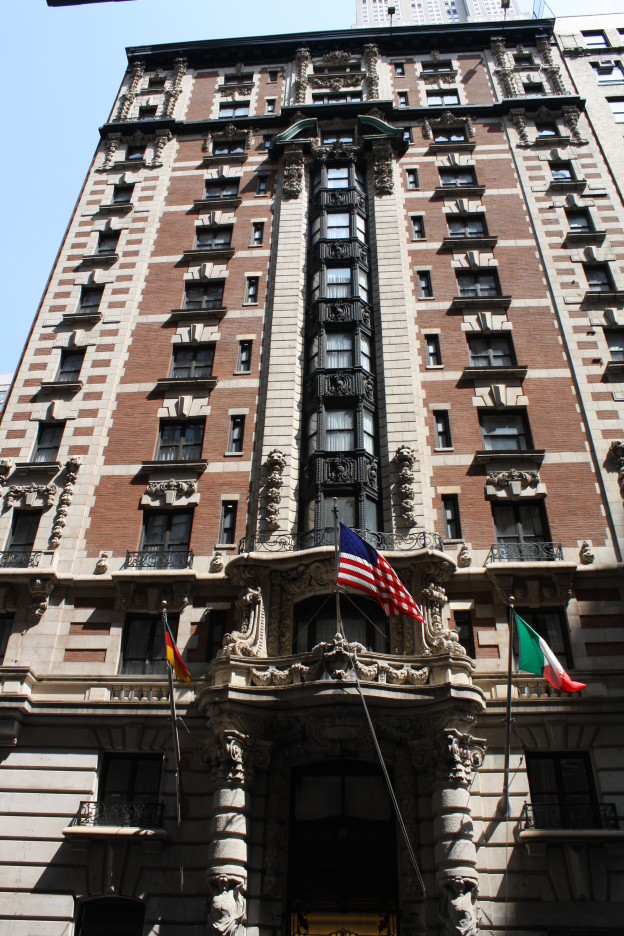
Former Hotel Seville

90 Madison Avenue;
Harry Allen Jacobs, 1901-03; annex: c. 1905|

Like Madison Square Park, Madison Avenue was named after James Madison, the fourth President of the United States. The Avenue begins at 23rd Street and extends to the Madison Avenue Bridge at 138th Street. When the Manhattan street grid was mandated in 1811, there was no avenue between Fourth (now Park) and Fifth Avenues. Madison Avenue was carved out in the 1840s due to the wide distance between Fourth and Fifth Avenues and in order to create more building lots with avenue frontage. This southern section of Madison Avenue is characterized by its fine assortment of large-scale hotels, lofts and office buildings.

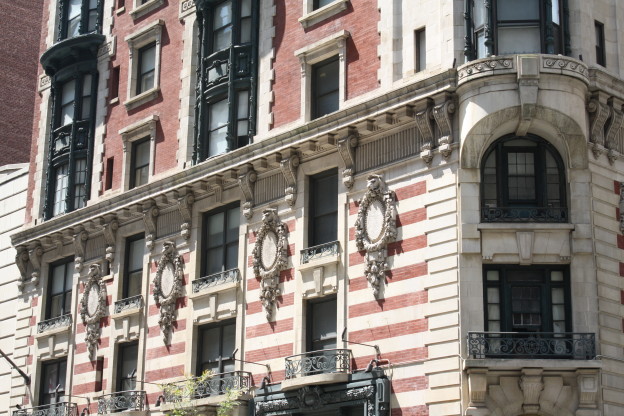
The Former Hotel Seville (currently the Carlton Hotel) replaced the former Scottish Rite Hall. The elegant Beaux-Arts hotel features red brick and limestone façades with a rusticated base, alternating bandcourses at the second and third stories, decorative cornices and projecting bays from the fourth to the tenth stories. One of these bays is located at the building’s chamfered corner, which is clad in limestone along the building’s full height. An annex between 28th and 29th Streets was added a few years after its construction.

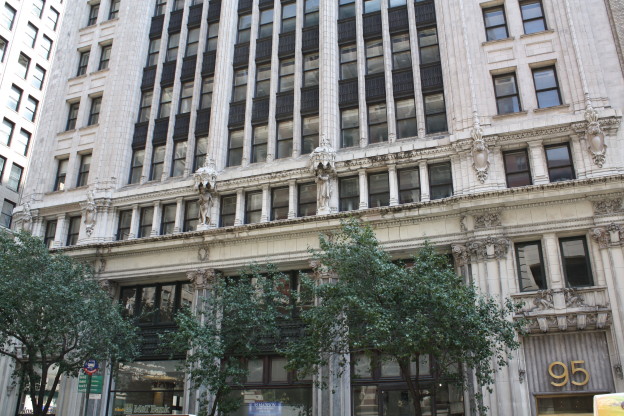
The Emmet Building

95 Madison Avenue;
Barney & Colt, 1911|

Like Madison Square Park, Madison Avenue was named after James Madison, the fourth President of the United States. The Avenue begins at 23rd Street and extends to the Madison Avenue Bridge at 138th Street. When the Manhattan street grid was mandated in 1811, there was no avenue between Fourth (now Park) and Fifth Avenues. Madison Avenue was carved out in the 1840s due to the wide distance between Fourth and Fifth Avenues and in order to create more building lots with avenue frontage. This southern section of Madison Avenue is characterized by its fine assortment of large-scale hotels, lofts and office buildings.

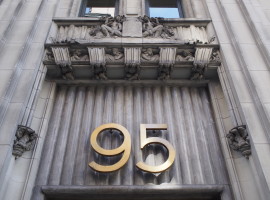
The Emmet Building was constructed for Dr. Thomas Addis Emmet, a prominent physician and advocate for Irish independence. He commissioned the 15-story office building on this site, where the home he lived in for more than 40 years had been situated. Like number 105, this striking Renaissance Revival style building is also clad in terra-cotta and features elaborate Gothic Revival ornament.

Martha Washington Hotel

East of Madison on East 30th Street;
Robert Gibson, 1901|

Like Madison Square Park, Madison Avenue was named after James Madison, the fourth President of the United States. The Avenue begins at 23rd Street and extends to the Madison Avenue Bridge at 138th Street. When the Manhattan street grid was mandated in 1811, there was no avenue between Fourth (now Park) and Fifth Avenues. Madison Avenue was carved out in the 1840s due to the wide distance between Fourth and Fifth Avenues and in order to create more building lots with avenue frontage. This southern section of Madison Avenue is characterized by its fine assortment of large-scale hotels, lofts and office buildings.

The Martha Washington Hotel stands just east of Madison on East 30th Street. The 12-story Renaissance Revival style building was the first hotel built to house professional women in New York City, a function it served until 1998 when it was converted to a regular hotel. The brick and limestone structure features prominent quoins, Palladian windows, splayed lintels and iron balconettes. The Martha Washington Hotel was designated a New York City Individual Landmark in 2012. 

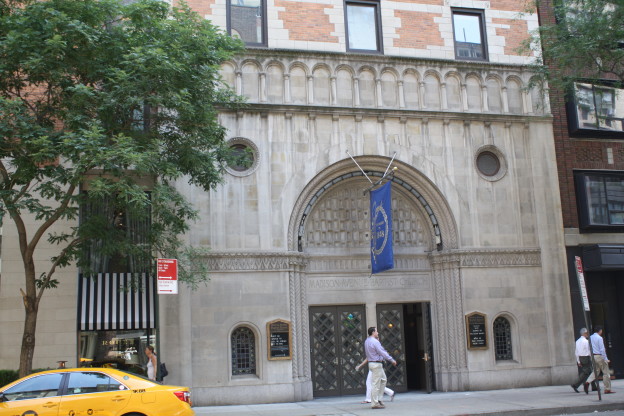
American Academy of Dramatic Arts/Colony Club

120 Madison Avenue;
McKim, Mead & White, 1905|

Like Madison Square Park, Madison Avenue was named after James Madison, the fourth President of the United States. The Avenue begins at 23rd Street and extends to the Madison Avenue Bridge at 138th Street. When the Manhattan street grid was mandated in 1811, there was no avenue between Fourth (now Park) and Fifth Avenues. Madison Avenue was carved out in the 1840s due to the wide distance between Fourth and Fifth Avenues and in order to create more building lots with avenue frontage. This southern section of Madison Avenue is characterized by its fine assortment of large-scale hotels, lofts and office buildings.

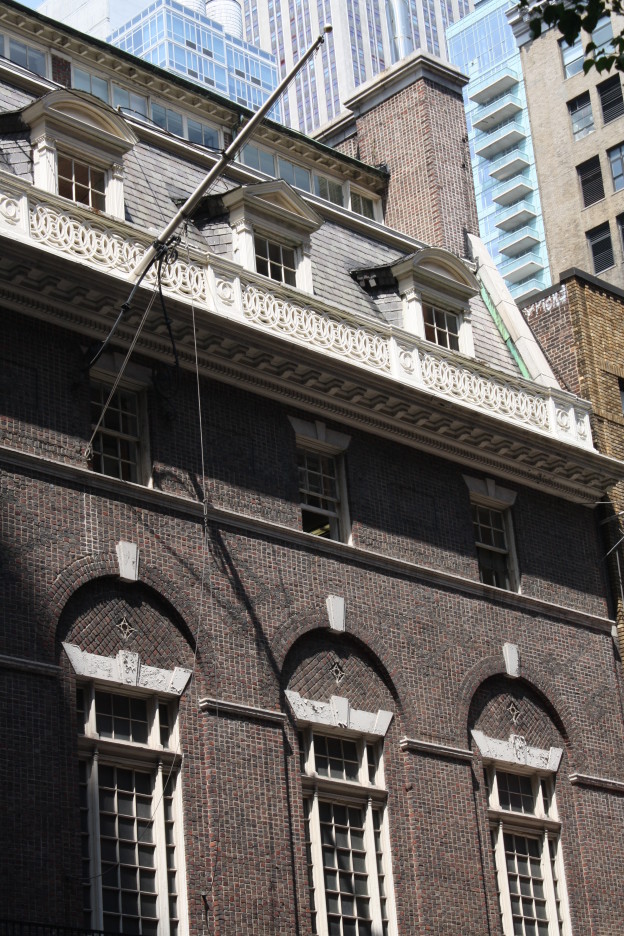
The Federal Eclectic style American Academy of Dramatic Arts/Colony Club is a graceful six-story structure of red brick with limestone trim. This Individual Landmark features a shallow balcony supported by pilasters at the ground level, five arched window openings at the second story, a perforated stone cornice and five dormer windows at its crown. The Colony Club was the first women’s organization in the city to build itself a club house for social and recreational activities.

The Roger Williams Hotel/Madison Avenue Baptist Church

129 Madison Avenue;
Jardine, Hill & Murdock, 1930|

Like Madison Square Park, Madison Avenue was named after James Madison, the fourth President of the United States. The Avenue begins at 23rd Street and extends to the Madison Avenue Bridge at 138th Street. When the Manhattan street grid was mandated in 1811, there was no avenue between Fourth (now Park) and Fifth Avenues. Madison Avenue was carved out in the 1840s due to the wide distance between Fourth and Fifth Avenues and in order to create more building lots with avenue frontage. This southern section of Madison Avenue is characterized by its fine assortment of large-scale hotels, lofts and office buildings.

The Roger Williams Hotel/Madison Avenue Baptist Church replaced the 1858 Madison Avenue Baptist Church structure that originally stood on this site. In 1930, this residential hotel was constructed with the church incorporated into its first four stories. The building’s Romanesque Revival style recalls the architecture of the original church.

The Terry & Tench Building

135 Madison Avenue;
J. B. Snook’s sons, 1910|

Like Madison Square Park, Madison Avenue was named after James Madison, the fourth President of the United States. The Avenue begins at 23rd Street and extends to the Madison Avenue Bridge at 138th Street. When the Manhattan street grid was mandated in 1811, there was no avenue between Fourth (now Park) and Fifth Avenues. Madison Avenue was carved out in the 1840s due to the wide distance between Fourth and Fifth Avenues and in order to create more building lots with avenue frontage. This southern section of Madison Avenue is characterized by its fine assortment of large-scale hotels, lofts and office buildings.

The Terry & Tench Building was named for the iron company that erected the building. Terry & Tench was also responsible for the steel construction of the Manhattan Bridge and Grand Central Terminal. This loft building was designed in the Edwardian style, a late Victorian style popular between 1901 and 1914 characterized by understated Classical influences.

The Manice Building

159 Madison Avenue;
Wallis & Goodwillie, 1911-12|

Like Madison Square Park, Madison Avenue was named after James Madison, the fourth President of the United States. The Avenue begins at 23rd Street and extends to the Madison Avenue Bridge at 138th Street. When the Manhattan street grid was mandated in 1811, there was no avenue between Fourth (now Park) and Fifth Avenues. Madison Avenue was carved out in the 1840s due to the wide distance between Fourth and Fifth Avenues and in order to create more building lots with avenue frontage. This southern section of Madison Avenue is characterized by its fine assortment of large-scale hotels, lofts and office buildings.

The Manice Building is a 12-story, Renaissance Revival style loft building, with arched openings at the ground level and a large, bracketed, overhanging cornice.

Warrington Hotel

161 Madison Avenue;
Israels & Harder, 1902|

Like Madison Square Park, Madison Avenue was named after James Madison, the fourth President of the United States. The Avenue begins at 23rd Street and extends to the Madison Avenue Bridge at 138th Street. When the Manhattan street grid was mandated in 1811, there was no avenue between Fourth (now Park) and Fifth Avenues. Madison Avenue was carved out in the 1840s due to the wide distance between Fourth and Fifth Avenues and in order to create more building lots with avenue frontage. This southern section of Madison Avenue is characterized by its fine assortment of large-scale hotels, lofts and office buildings.

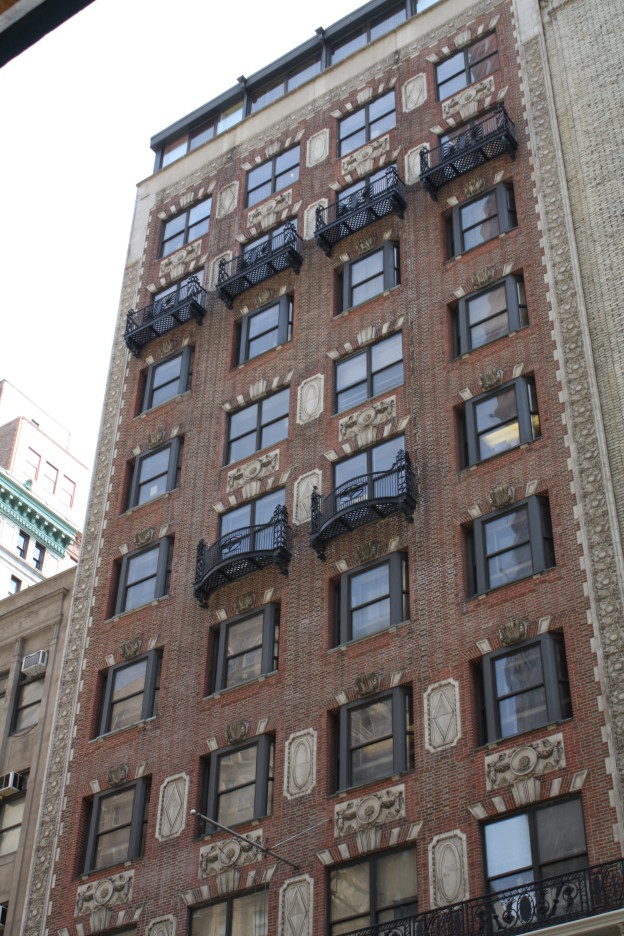
The Beaux-Arts style former Warrington Hotel features rich ornament, including sculpted panels, brackets, iron balconies and limestone quoins. It was originally built as a residential hotel.

The Madison Belmont Building

81 Madison Avenue;
Warren & Wetmore, 1924|

Like Madison Square Park, Madison Avenue was named after James Madison, the fourth President of the United States. The Avenue begins at 23rd Street and extends to the Madison Avenue Bridge at 138th Street. When the Manhattan street grid was mandated in 1811, there was no avenue between Fourth (now Park) and Fifth Avenues. Madison Avenue was carved out in the 1840s due to the wide distance between Fourth and Fifth Avenues and in order to create more building lots with avenue frontage. This southern section of Madison Avenue is characterized by its fine assortment of large-scale hotels, lofts and office buildings.

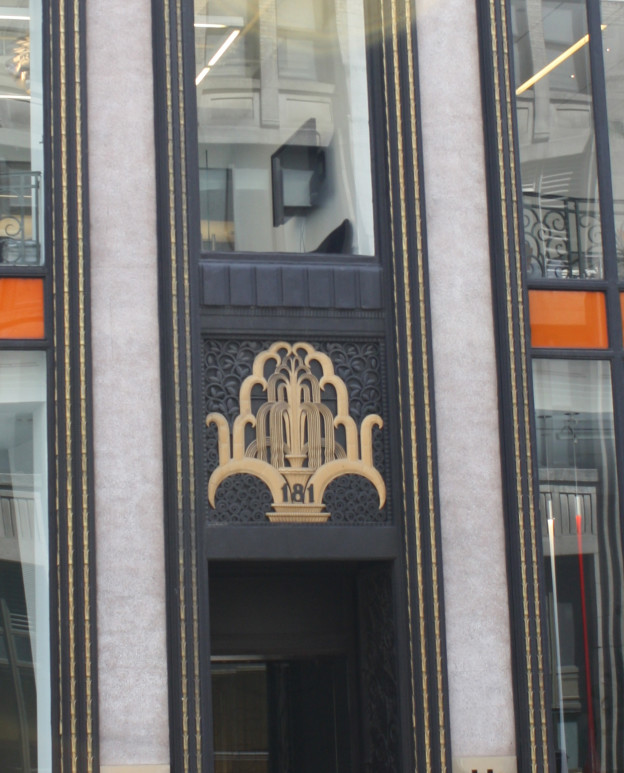
The Madison Belmont Building was constructed for the Cheney Brothers Silk Company, the country’s largest silk mill at the time, when this area was briefly known as the Silk District. Its overall Renaissance Revival style is accented by prominent Art Deco elements, and was one of the first buildings in the United States to incorporate such motifs. Its elegant iron and bronze framing at the lower three floors and entrances was designed by Edgar Brandt, a pioneer of the Art Deco style in Paris. The building was designated both an Individual and Interior Landmark in 2011.

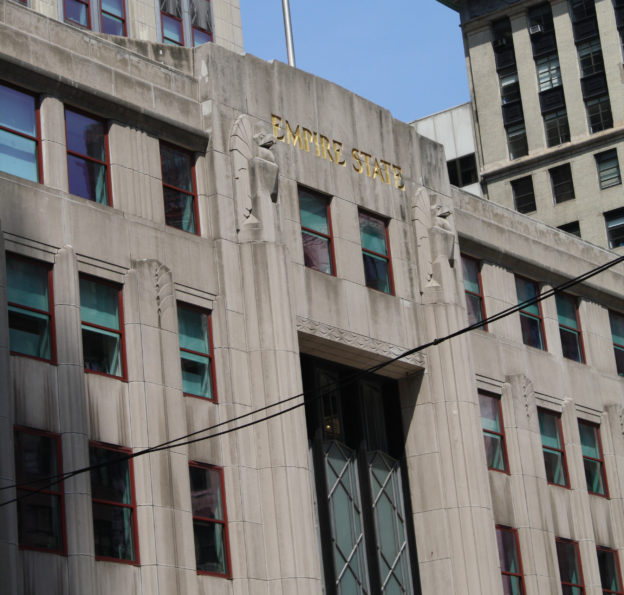
Empire State Building, 339 Fifth Avenue

350 Fifth Avenue, William F. Lamb of Shreve, Lamb and Harmon, 1929-31;
Renwick, Aspinwall & Russell, 1889|

At the corner of 33rd Street and Fifth Avenue, one can look up at the Empire State Building, a New York City and American icon. Its varied massing and impressive height are on especially prominent display from this vantage point, as is its Art Deco entrance on Fifth Avenue. An interesting juxtaposition just across the street to the east is the Renaissance Revival style carriage store at number 339, a rare survivor in this midtown context. The rather squat, but strong building features three-story, round-arch windows on both the Fifth Avenue and 33rd Street façades, as well as ornamental roundels between the arches, panels at the roofline and a dentilled cornice.

The Empire State Building was designed a New York City Individual Landmark  and an Interior Landmark in 1981.

Former Hotel Martinique, 1270 Broadway, Former McAlpin Hotel

1260 Broadway Henry J. Hardenbergh, 1897-98, 1901-03, 1909-11;
Rouse & Goldstone, 1911-12;
1282 Broadway, Frank M. Andrews, 1911-12; expansion: Warren & Wetmore, 1917|

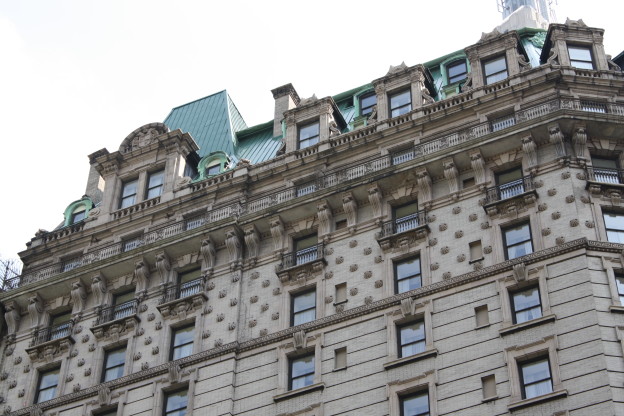
The east side of Broadway between 32nd and 34th Streets, across from Greeley Square, features three monumental Beaux-Arts buildings. The former Hotel Martinique (now the Radisson Martinique), designed by the same man responsible for the Plaza Hotel, is a glazed brick, terra-cotta and limestone clad structure that features rusticated stonework, balconies, cartouches and a bold mansard roof with ornate dormers. It was designed to make great use of its commanding corner overlooking the square. 1270 and 1282 Broadway were part of the major redevelopment of West 34th Street and Herald Square, inspired by the construction of Pennsylvania Station, one block to the west. 1270 Broadway, a monumental office building, features a decorative cast-iron storefront, rusticated limestone on its second and third stories, and a grand top story with paired-arch windows and a grand bracketed cornice. At 25 stories tall, the McAlpin was said to be the largest hotel in the world upon its completion in 1912. The structure’s three towers have a tripartite design, with rusticated limestone bases, brick shafts and decorative upper stories with large overhanging cornices.

The former Hotel Martinique was designated a New York City Individual Landmark in 1998.

Former Grolier Club, Former St. Louis Hotel, Former Aberdeen Hotel

29 East 32nd Street, Charles W. Romeyn, 1890;
34 East 32nd Street, George F. Pelham, 1903;
17 West 32nd Street, Harry B. Mulliken, 1902-04|

This Romanesque Revival, 3-story clubhouse was the home of the Grolier Club, a society devoted to the book arts, from 1890 until it moved uptown in 1917. The club, named for the 16th century French bibliophile Jean Grolier, formed in 1884 and continues to operate today. The building’s bold arches, Roman brick and stone moldings form a strong overall symmetry and texture. Just east across the street is the former St. Louis Hotel, a grand, Beaux-Arts style structure of red brick with a rusticated limestone base and rich ornament, including limestone window surrounds, bracketed cornices, and balconettes, as well as projecting bay windows and a mansard roof with three dormers. This structure bears a strong resemblance to another magnificent hotel just one block west, the former Aberdeen Hotel. It also features red brick with a rusticated limestone base and projecting bay windows, as well as richly decorated balconettes and cornices. The Aberdeen had originally been built as an apartment hotel, but began accepting transient guests in 1912 and was one of the first hotels to accept unaccompanied women in the 1920s.

The Former Grolier Club was designated a New York City Individual Landmark in 1970. The Former Aberdeen Hotel was designated a New York City Individual Landmark in 2001.

Madison Avenue Baptist Church Parish House and 36 East 31st Street

30 East 31st Street, Butler & Rodman, 1906-07;
Walter Haefeli, 1914|

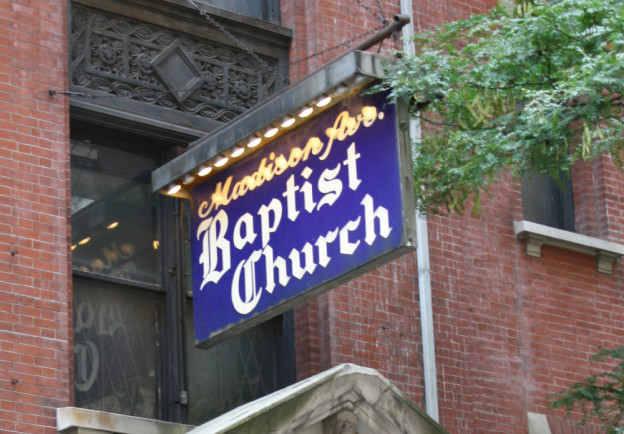
The Madison Avenue Baptist Church once stood on the corner of 31st Street and Madison Avenue, just next door to this small structure. The building was replaced in 1930 with a 17-story residential hotel with space for the church in the first four stories. The previous church had been constructed in 1858 in the Romanesque Revival style, which informed the design of the much later Parish House, which itself replaced a chapel on this site. The Parish House retains an old sign with its previous namesake. On a much grander scale, just down the block, is an Eclectic loft building at number 36, which originally housed garment industry firms. The structure features double-height fluted columns at the first and second stories and the top two stories, as well as ornamental brickwork and carved stone accents.

Note this building has been demolished.

Madison Square North Historic District highlights

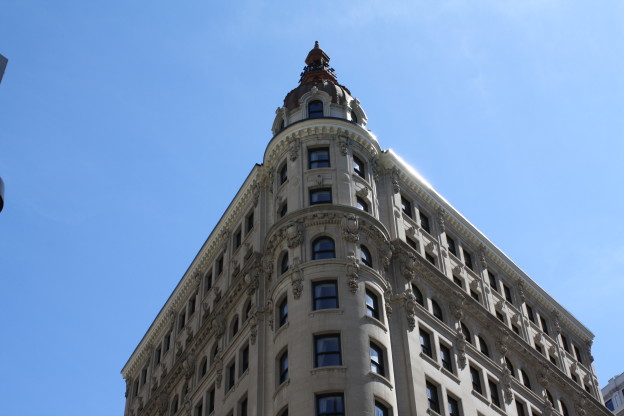
In 2001, the Landmarks Preservation Commission designated the Madison Square North Historic District, encompassing 96 buildings from roughly 25th to 29th Streets and Madison to Sixth Avenues. Contained within the district are fine examples showcasing the area’s historical evolution. Six hotel buildings still stand in the district, including the Beaux-Arts style former Prince George Hotel (Howard Greenley, 1904-05), located at 14 East 28th Street. It was one of the largest hotels in the city at the time of its opening. The earliest commercial buildings in the district were small in scale, but varied in their architectural styles. These include 1180 Broadway (Stephen Decatur Hatch, 1870), a five-story, Classical Revival structure with a cast-iron façade and 21 West 26th Street (Thomas Stent, 1883), a red brick Queen Anne style building. As various industries, and thus residents, were thriving in the district, financial institutions began to emerge. The ground floors of many office structures were converted into banks, including the Lincoln National Trust at 208 Fifth Avenue (John Duncan, 1902) and the Emigrant Savings Bank at 206 Fifth Avenue (Townsend, Sternle & Haskell, 1919). Structures built specifically as banks include the Lincoln National Trust’s Beaux-Arts style building at 204 Fifth Avenue (C. P. H. Gilbert, 1913) and the Second National Bank of the City of New York at 250 Fifth Avenue (McKim, Mead & White, 1907-08), a strong institutional structure designed in the Classical Revival style. Taller commercial structures, the area’s most common building type, were constructed beginning in the 1890s, mostly in the Classical Revival and Beaux-Arts styles. One of the most magnificent of these is 1170 Broadway (Shickel & Ditmars, 1902-03), formerly known as the Johnston Building, but recently converted into the NoMad Hotel. Its Beaux-Arts limestone façades reach their crescendo with a dome at the rounded corner bay. A late example of a large-scale commercial building in the district is 261 Fifth Avenue (Buchman & Kahn, 1928-29), a 28-story, Art Deco style tower with rich polychrome terra-cotta ornament.

The Wilbraham, Hotel Wolcott

284 Fifth Avenue, D. and J. Jardine, 1888-90;
4 West 31st Street, John H. Duncan, 1902-04|

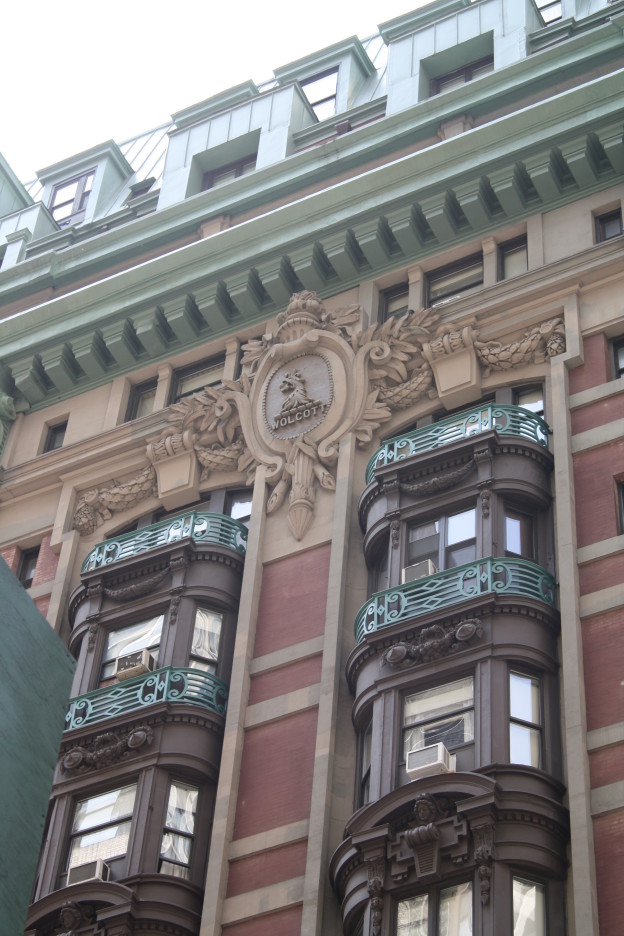
Just around the corner from one another are two grand hotels that feature copper mansard roofs. Built as a bachelor apartment hotel, The Wilbraham catered to professional men of means. The imposing Romanesque Revival style structure is clad in brick, brownstone and cast-iron, and its eight stories are graced with rock-faced stonework and intricate carvings. The Hotel Wolcott, a 12-story Beaux-Arts style building clad in pink brick and limestone, was home to such illustrious residents as Isadora Duncan and Henry Miller, and hosted the inaugural ball for Mayor Fiorello LaGuardia in 1938.

The Wilbraham was designated a New York City Individual Landmark in 2004. The Hotel Wolcott was designated a New York City Individual Landmark in 2011.

Church of the Transfiguration

1 East 29th Street|
(church: 1849; guildhall, transept and tower: 1852; lich-gate: Frederick C. Withers, 1896; Lady Chapel: 1906; Mortuary Chapel: 1908; rectory: c. 1849-50)

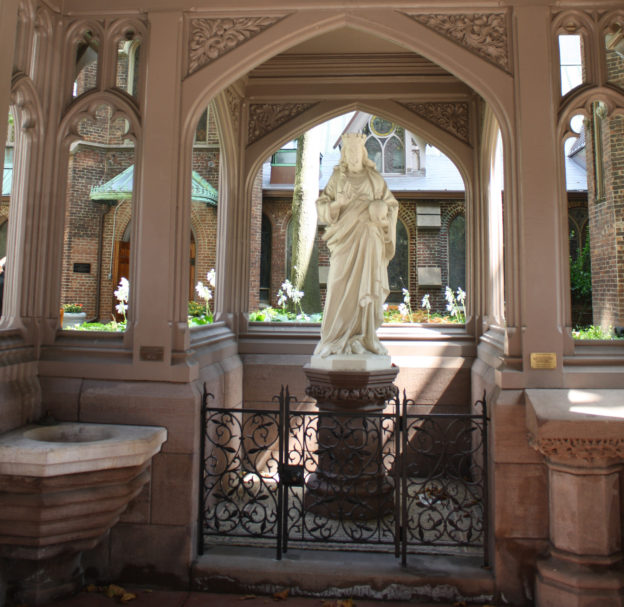
Church of the Transfiguration, known since the 1870s as “The Little Church Around the Corner,” is made up of several Gothic Revival style buildings, all of red brick with brownstone trim. The church is accessible through a small lich-gate, one of the site’s most striking features, and a gift from Mrs. Franklin Hughes Delano (great aunt of Franklin Delano Roosevelt) in 1896. The lich-gate, a common feature of English churches, was originally meant to provide a covered place for pallbearers to rest coffins while waiting for the priest to arrive for funeral services (“lich” is an Anglo-Saxon word meaning body or corpse). The church’s main entrance is within the tower, which features Gothic arches and a peaked roof with dormer windows and a cross at its crown. To the west of the tower is the rectory building, a five-story, Gothic Revival structure with a mansard roof and an octagonal extension with a full-height, projecting, wooden window bay, an ornate cast-iron balcony and Gothic panels on the third floor.

The Church of the Transfiguration were designated a New York City Landmark in 1967, and added to the National Register of Historic Places in 1973.

Gilsey House

1200 Broadway;
Stephen Decatur Hatch;
1869-71|

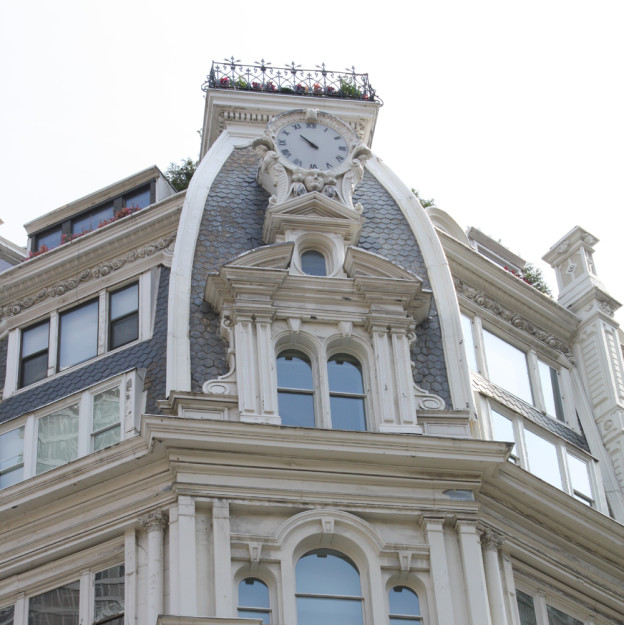
The Second Empire style Gilsey House commands the corner of Broadway with its white, cast-iron façades and chamfered corner. The building was designed to recall the Second Empire penchant for pavilions, created by the use of columns and convex mansard towers. The structure had been a hotel until 1911, for roughly 40 years during the neighborhood’s reign as an entertainment district. When the theaters moved uptown to Times Square, the building found itself standing in the new garment district and was converted to loft space. In 1980, the building was restored and converted into cooperative apartments.The Gilsey House was designated a New York City Landmark in 1979, and listed on the National Register of Historic Places in 1978.

Tin Pan Alley

41-55 West 28th Street|

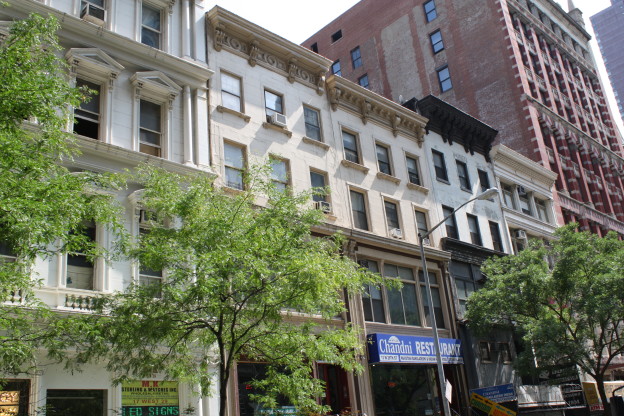
From the 1890s to around 1910, this row of structures, which mostly date to the 1850s through the 1870s, was home to influential music publishers and songwriters’ studios. The row is known as the birthplace of the modern music industry, where sheet music was first developed, categorized into genres and marketed as a commodity for mass distribution. Publishers also hired piano players to demo songs for high-profile performers, launching the careers of many American songwriters, including Scott Joplin, George M. Cohan, Irving Berlin and (possibly) George Gershwin. Famous tunes originally published here include Albert Von Tilzer’s “Take Me Out to the Ballgame” (1908) and one of the first ragtime compositions, Ben Harney’s “You’ve Been a Good Old Wagon, But You’ve Done Broke Down” (1896), now a Blues standard. The origin of the name “Tin Pan Alley” is not clear, though many attribute it to the sound of pianos ringing out into the street. By 1911, the industry had moved uptown. Plans to demolish the buildings never came to fruition, in part due to the Great Depression, and the area was spared from urban renewal initiatives in the 1950s and 1960s. With the area’s rise in desirability, the demand for hotel sites has threatened small buildings. In 2013, Tin Pan Alley’s remaining buildings were sold to a developer. Without landmark protection, many fear this could signal the disappearance of this legendary cultural landmark.

Serbian Orthodox Cathedral of Saint Sava & Parish House, Former Arlington Hotel

15 West 25th Street, Richard Upjohn, Cathedral: 1850-55; Parish House: 1860;
18 West 25th Street, Israels & Harder, 1901|

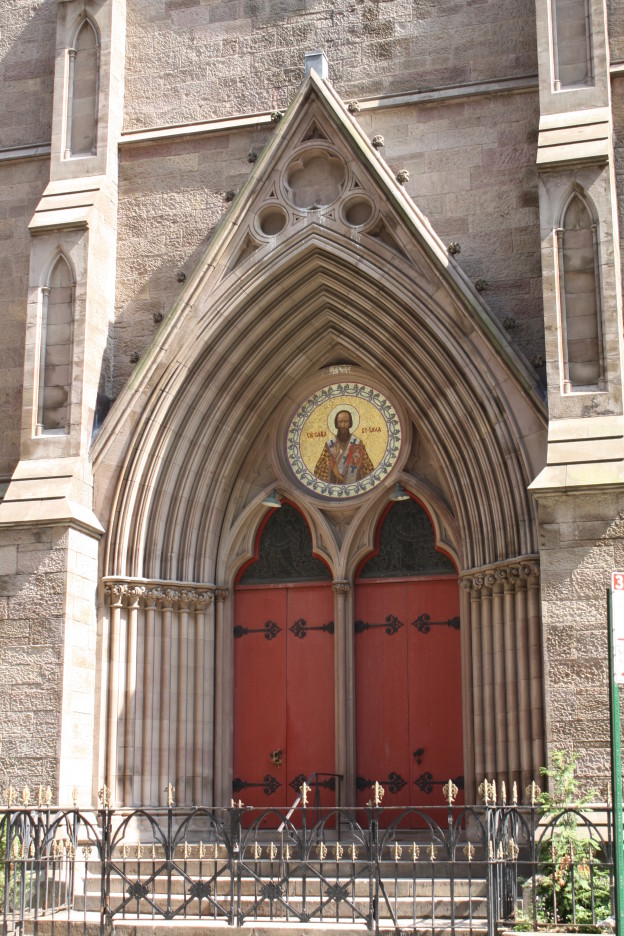
Across from one another on this block are two formidable structures. On the north side is the brownstone-clad Serbian Orthodox Cathedral of Saint Sava, designed in the English Gothic Revival style by Richard Upjohn, one of the most prominent church architects of his day, as an uptown branch chapel of Trinity Church. The West 25th Street façade features a steeply pitched gable with an impressive rose window and a pointed arch entry with slender columns. Next door to the east is the Parish House, also designed in the English Gothic Revival style, which features a charming arched belfry at its crown. The Serbian Orthodox Cathedral of Saint Sava & Parish House was designated a New York City Individual Landmark in 1968. Across the street is the Renaissance Revival style former Arlington Hotel, a much later structure than the church. It is richly decorated with sculpted limestone quoins, bandcourses, window surrounds and a dentilled cornice.

West 24th Street between Sixth and Fifth Avenues

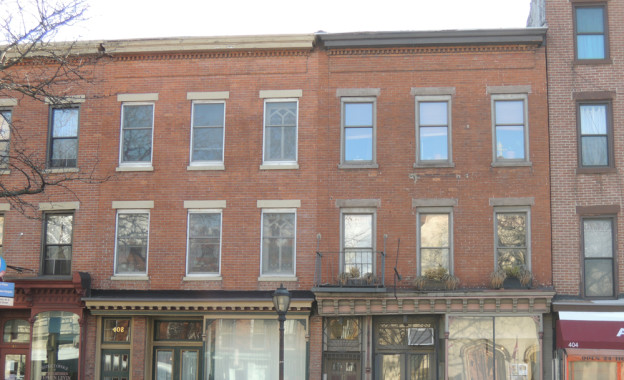
The south side of this block is within the Ladies’ Mile Historic District, while the north side remains unprotected. Walking west toward Sixth Avenue, there are two 1850s rowhouses that stand as reminders of the neighborhood’s early residential character. Number 7 (c. 1857-58) and number 17 (c. 1850-51) were designed in the Italianate style popular at that time. The Renaissance Revival style loft building at number 49 (Hill & Stout, 1908) features interesting brick coloration and moldings. Across the street is the imposing Masonic Hall (Harry P. Knowles, 1907-09), within the historic district. Its grand exterior gives way to lavish interiors, as well.

Madison Square Park

1847; redesigned by Ignatz Pilat and William Grant, 1870|

Designated a public space in the first city charter of 1686, the area of Madison Square Park was enlarged and changed hands several times throughout the 18th century for use as farmland. In 1780, the city reacquired 37 of its acres, which it then subdivided. Within the current confines of the park, the city constructed an arsenal in 1807 and designated a 44-block area (from the present day 23rd to 34th Streets and Third to Seventh Avenues) as a military parade ground. The arsenal and parade provided a key military post for maneuvers and drills during the War of 1812. In 1814, the parade ground was renamed Madison Square in honor of James Madison, the fourth President of the United States. At that time, it was reduced to the area between 23rd and 31st Streets and Sixth to Park Avenues. In 1825, the arsenal was transformed into the House of Refuge, operated by the Society for the Reformation of Youthful Delinquents, but the structure burned down in 1839.

In 1847, the city reacquired 23rd to 26th Streets between Fifth and Madison Avenues, leveling the ground and laying out formal pathways. After the park’s opening, magnificent residences and hotels cropped up along the park and the neighborhood became the city’s most elite address. Just west of the park, a small triangular parcel was created between 24th and 25th Streets where Broadway and Fifth Avenues intersect. The lot became an extension of Madison Square Park, and in 1857, a 51-foot granite obelisk designed by James Goodwin Batterson was erected to honor General William Jenkins Worth, for whom Fort Worth, Texas, and Worth Street in Lower Manhattan were also named. There are statues of several other notable men in the park: William H. Seward (Randolph Rogers, 1876), David Glasgow Farragut (Augustus Saint-Gaudens and Stanford White, 1881), Roscoe Conkling (John Quincey Adams Ward, 1893) and Chester Arthur (George Bissell, 1898). When the city’s first Department of Public Parks was established in 1870, the park was redesigned with formal and picturesque components, including walkways, open lawns and a large circular fountain at the south end. The park retains this general layout today, after a comprehensive restoration of the park was completed in 2001.

The southwest corner of 26th Street and Madison Avenue, just across from the park’s northeast corner, is a noteworthy site in the neighborhood’s commercial history. The site had been a passenger depot for Cornelius Vanderbilt’s New York and Harlem Railroad, but after the construction of the first Grand Central Depot in 1870, Phineas Taylor Barnum leased the space and converted it into his famous “Hippodrome,” the site of his first circus performances beginning in 1873. In 1874, P. T. Barnum subleased the site to Patrick Gilmore for his “Gilmore’s Garden,” a broad entertainment complex, with the P. T. Barnum circus continuing to be a feature in the summer months. In 1877, Cornelius Vanderbilt’s son William inherited the property and resumed its operation under the name “Madison Square Garden.” Vanderbilt expanded the complex with a grand new structure designed in the Spanish Revival style by McKim, Mead and White (1889-90). Due to financial deficits, Madison Square Garden moved uptown (first to 50th Street and Eighth Avenue and then to its present home at 33rd Street and Eighth Avenue) and the building was razed in 1925.

Six to Celebrate Tours 2014

Meeting Location Information Will Be Sent To Those Who Have Registered A Week Prior To The Tour 

 ——————————————————————————————————

Atlantic AvenueAtlantic Avenue, Brooklyn
Saturday, June 14, 11:00AM (WALKING TOUR)
SOLD OUT !!
View Pictures of the Tour
A commercial thoroughfare for more than one hundred years, Atlantic Avenue is a diverse retail and dining destination connecting the historic neighborhoods of Boerum Hill, Brooklyn Heights and Cobble Hill. Join us as tour guide Joe Svehlak leads this walking tour between 4th Avenue and Hicks Street, discussing Atlantic Avenue’s architecture, social and commercial history, as well as areas that have been more recently redeveloped.


Forest Close, QueensForest Close
Saturday, June 7, 11:00AM (WALKING TOUR)
SOLD OUT !!
View Pictures of the Tour
Led by architectural historian Barry Lewis, this walking tour will cover some of the highlights of Forest Hills, one of the city’s most beautiful suburban-style communities developed in the early 20th century. Featured on the tour is Forest Close, a nook of 38 neo-Tudor houses surrounding a communal garden. Designed in 1927 in the spirit of the garden city movement, Forest Close can be described as an enclave within an enclave, its private orientation and country-inspired architecture lending charming appeal.


Park AvenuePark Avenue, Manhattan
Tuesday, June 17, 6:00PM (WALKING TOUR)
SOLD OUT !!
View Pictures of the Tours
After a years-long preservation campaign by a coalition of residents, activists and community groups, 2014 is Park Avenue’s year! In February, the Landmarks Preservation Commission held an important Historic District hearing to landmark Park Avenue’s unprotected blocks, and in April, the Commission voted to landmark the district! Votes by the City Planning Commission and City Council are expected in the coming months. Join tour guide Justin Ferate on this walking tour of New York City’s premier historic boulevard and learn more about the effort to protect Park Avenue’s historical and architectural significance.


From Yiddish to Chinese and Beyond: A Walking Tour of Historic Libraries in ChinatownSeward Park Branch, exterior, west façade, 2010 (HDC)
Thursday, July 10, 6:00 PM (WALKING TOUR)

View Pictures of the Tour 
Visit two of the busiest Carnegie libraries in the New York Public Library system as well as other sites of interest between and near them, including one of the oldest graveyards in New York, Al Smith’s childhood home, and Knickerbocker Village, a forerunner of later urban renewal projects. The tour, led by John Bacon, HDC board member and Director of Planned Giving at The New York Public Library, will start at the McKim, Mead and White-designed Chatham Square Library and conclude at the Seward Park Library, which became a New York City landmark in 2013.


Madison Square North, ManhattanMadison Square North
Sunday, September 14, 11:00AM (WALKING TOUR)

SOLD OUT !!
View Pictures of the Tour 

This architecturally diverse neighborhood includes pre-Civil War rowhouses, late 19th century hotels, early 20th century loft and commercial structures, and the remaining buildings of the famous Tin Pan Alley. To better reflect the neighborhood’s boundaries, local residents and advocates have submitted a Request for Evaluation to the Landmarks Preservation Commission to expand the Madison Square North Historic District. Join us as HDC Board member and Madison Square North expert Marissa Marvelli leads a walking tour of this fascinating neighborhood.


Staten Island CemeteryStaten Island’s Historic Cemeteries
Saturday, September 27, 11:00AM (TROLLEY TOUR)

SOLD OUT !!
View Pictures of the Tour 

Celebrate Halloween early with a visit to Staten Island’s historic places of memory and rest. Led by Lynn Rogers, executive director of the Friends of Abandoned Cemeteries of Staten Island, this trolley tour will explore three cemeteries dating to the early 19th century. Stops will include the Marine Hospital/Quarantine Station Cemetery, where thousands of Irish Famine Immigrants were reinterred in April 2014; the Staten Island/Fountain Cemetery & Native American Burial Ground, a haunted site and the city’s largest abandoned cemetery (8 acres); and Lake Cemetery, a working class cemetery where many Civil War and WWI Veterans were buried.


Park Avenue, Manhattan
Monday, October 6, 6:00PM (Walking Tour)

SOLD OUT !!
View Pictures of the Tour 

The June 17 Six to Celebrate tour of the newly designated Park Avenue Historic District quickly sold park avenue tour out and was extremely well received. As such, Urban Historian Justin Ferate will conduct a second tour – beginning at Park Avenue at 91st Street and traveling south along the avenue. The upper segment of the new district boasts of elegant apartment houses by such impressive architects as J.E.R. Carpenter, George & Edward Blum, Mott B. Schmidt, Emery Roth, Mills & Bottomley, and others. In addition, we’ll view religious structures by some of America’s noteworthy ecclesiastical design firms: Patrick C. Keely, Cram, Goodhue & Ferguson, and Schickel & Ditmars.

Join us on this walking tour of New York City’s premier historic boulevard. Learn more about the histories of these remarkable architectural treasures and the effort to protect Park Avenue’s historical and architectural significance for future generations.

A Tale of Three Carnegies: A Tour of Historic Libraries in Harlem and the South Bronx
Saturday, October 18, 2:00PM (WALKING TOUR)

SOLD OUT !!

cornershot

Following the July tour of Carnegie libraries in Chinatown, John Bacon, HDC board member and Director of Planned Giving at The New York Public Library, will return to lead another tour of Carnegie libraries in Harlem and Mott Haven. In Harlem, we will visit the 115th Street and Harlem Libraries, and view the impressive Mount Morris Historic District in between. Bring your Metrocard, as we will then hop on the subway to the South Bronx to visit the beautiful Mott Haven Library and take in its notable children’s floor.