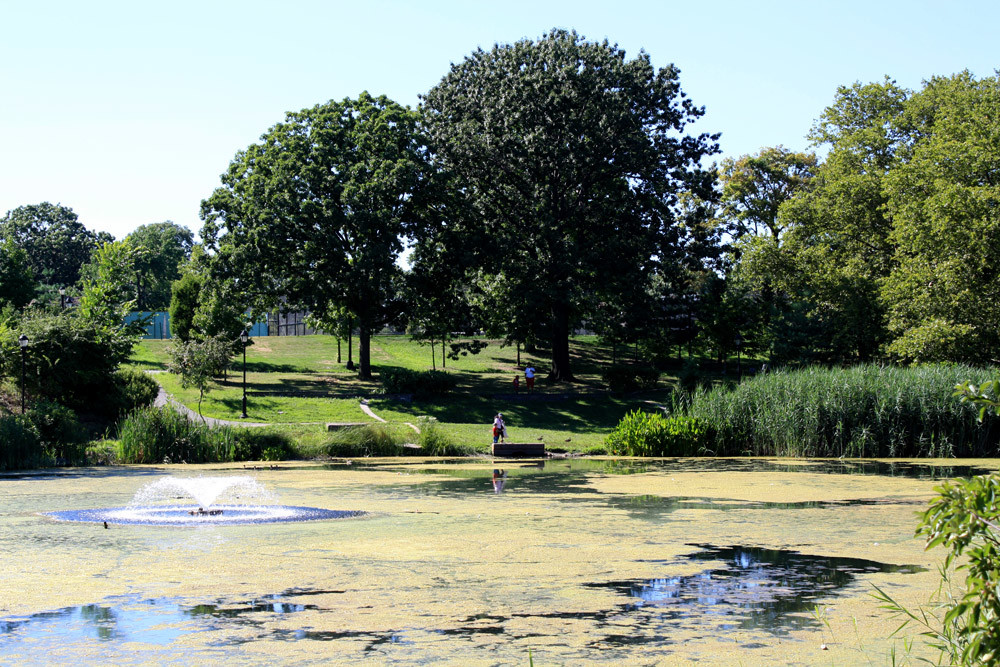
When the western Bronx was annexed by New York City in 1874, it was only a matter of time until this rural area would experience widespread urban expansion and a surge in population. John Mullaly (1835–1915), regarded as the “father of the Bronx Park system,” was a newspaper reporter and editor who looked upon this future growth with concern for the well-being of city residents and for the intelligent development of the city itself. Mullaly’s effort culminated in the 1884 New Parks Act and the City’s 1888-90 purchase of 4000 acres for Claremont, Crotona, Van Cortlandt, Bronx, St. Mary’s, and Pelham Bay Parks, as well as the Mosholu, Bronx, Pelham, and Crotona Parkways that connect the parks to one another. In 1932, 18 years after his death, Mullaly Park in the south Bronx was dedicated in his honor.
To read more click here
1888;
1925|
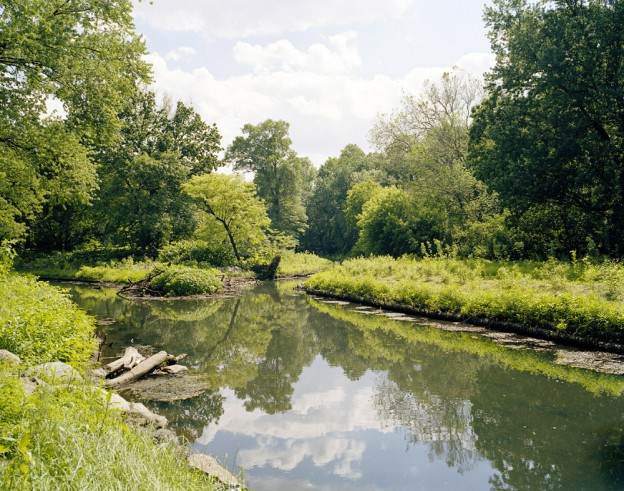
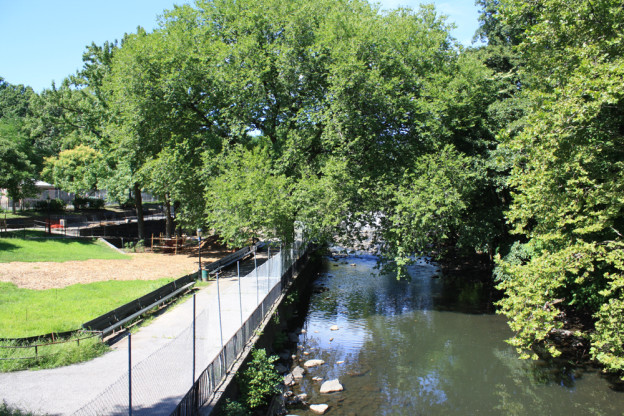
Before European settlement, this area was covered with old-growth hardwood trees. Though the trees are only about one hundred years old, this forest recalls that magnificent historic resource. Burke Bridge is a lovely place to experience the forest and the Bronx River. Originally called “Aquehung” or “River of High Bluffs” by the Mohegan Indians, the 23-mile river originates from a small tributary stream in Westchester County and empties into the East River. In 1639, Swedish pioneer Jonas Bronck (1600-1643) purchased 500 acres from the Mohegans, including a large section of the river, which became known as “Bronck’s River.” Thus, the river, and subsequently the borough, got its name. Bronck and other settlers harnessed its energy to power mills, and three of these still exist downstream. The river was very clean before construction of the New York Central Railroad in the 1840s, which created an industrial corridor that polluted the river dramatically. The formation of Bronx Park in 1888 created a buffer in an effort to protect it. In 1925, the 15.5-mile Bronx River Parkway was completed as a pleasure drive and recreation zone, with parks stretching up to the Kensico Dam.
Established 1895;
Robert W. Gibson, 1896-1901;
Fountain of Life, Charles E. Tefft, 1903-05;
Tulip Tree Allée, Nathaniel Lord Britton, 1903-11 – NYCIL|
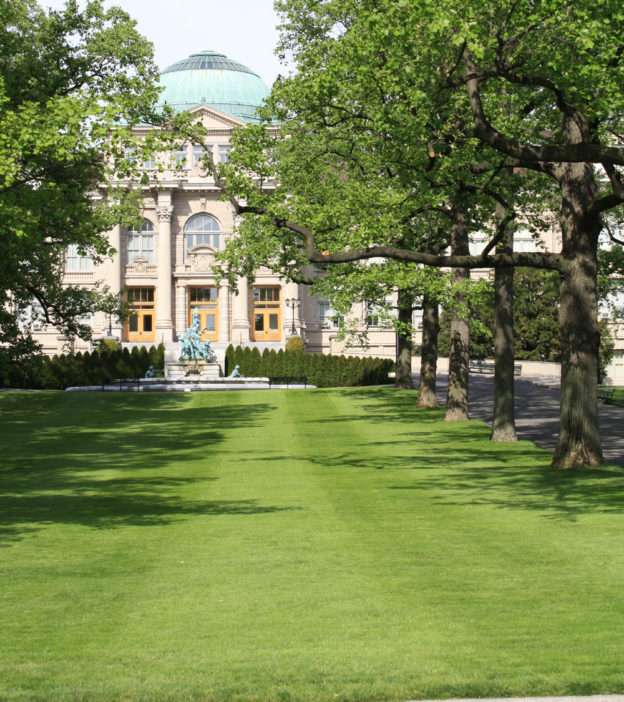
The New York Botanical Garden, an internationally renowned public garden and research institution, is within Bronx Park in an area previously owned by tobacco magnate Pierre Lorillard. In 1891, the City allocated 250 acres for a public botanical garden, for which the Torrey Botanical Club had advocated for some time. The Club led a private fundraising campaign for the project, and this public-private structure still exists today. Nathaniel Lord Britton and his wife Elizabeth Gertrude Britton, prominent botanists, worked with the Club on this initiative, and in 1896, Mr. Britton became the institution’s first director. The The New York Botanical Garden was made a National Historic Landmark, and listed on the State and National Register of Historic Places in 1967.
3016 Webster Avenue;
Stoughton & Stoughton;
1904-06|
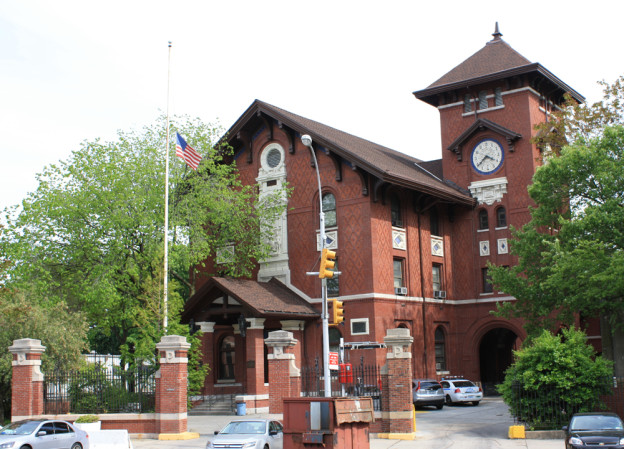
When the East Bronx was annexed in 1898, its population grew rapidly and this area was in need of police protection, which led to the construction of the 52nd Police Precinct. The red brick Italian Renaissance Revival villa features a square tower with projecting eaves and blue and white terra-cotta clocks on three of its sides, protected by pitched roofs with wooden bracket supports. The Police station was designated a New York City Individual Landmark in 1974 and was added to the State and National Register of Historic Places in 1982.
1888; extended: 1935-37|
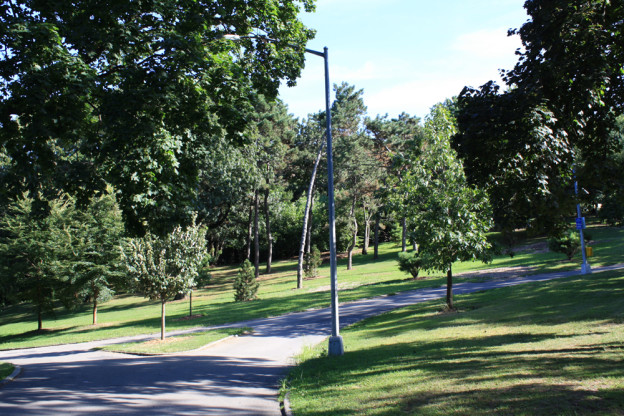
In the 1860s, Frederick Law Olmsted designed a system of roads to connect the city’s parks. These “parkways” were meant to accommodate different types of traffic and allow for optimal efficiency. Separated by pleasing landscaping, the center roadway was for private, through traffic, while parallel side roads were for local and commercial traffic. Intersections were via bridges and tunnels to avoid breaks in traffic flow. Mosholu Parkway was acquired in 1888, and originally connected Bronx and Van Cortlandt Parks. In 1935-37, its three miles were extended to link up with the Henry Hudson Parkway in the northwest (the two become the Saw Mill River Parkway to the north) and the Bronx River Parkway to the east. Mosholu is the Algonquin word for “smooth stones” and refers to Tibbett’s Brook, which runs from Yonkers through Van Cortlandt Park.
3400 Reservoir Oval;
West George Birdsall, (chief engineer, NYC Department of Public Works) ;
1889-90;
1884-89|
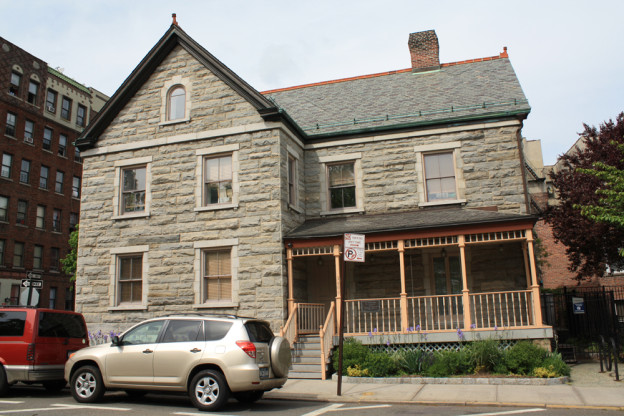
The Williamsbridge Reservoir was created to bring fresh water to west Bronx residents via a pipeline from lakes north of White Plains. Due to the contiguous construction of the New Croton Aqueduct, it only operated until 1919 and was handed over to the Parks Department in 1934. Of note is the Recreation Building, constructed in 1937. The cottage across the street was built for the reservoir’s supervisor. The cottage is made of rock-faced ashlar with a granite foundation and trim, and features a slate gable roof, copper gutters and an ornate porch. The house was unoccupied for many years until it was purchased in 1946 as a private residence. In 1999, the Mosholu Preservation Corporation transformed it into their headquarters. The Keeper’s House was designated a New York City Individual Landmark in 2000, and as listed on the State and National Register of Historic Places in 1999.
3266 Bainbridge Avenue;
1758|
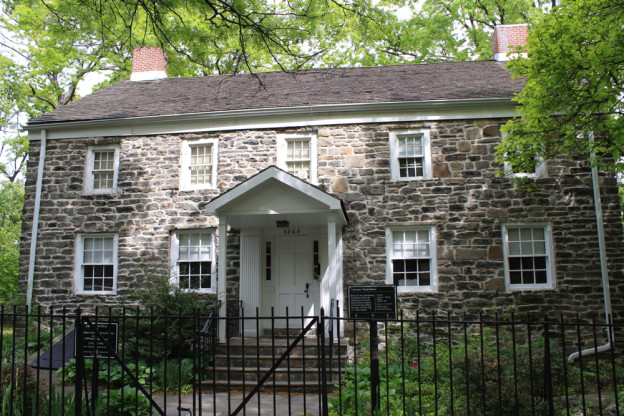
The second oldest in The Bronx, this house was built by blacksmith and farmer, Isaac Valentine, out of native stone on the property’s 260 acres. During the Revolutionary War, it was occupied by British, Hessian and patriot troops, and was the site of several skirmishes. The house survived the conflict, but its owner fell on hard times and sold it to Isaac Varian in 1792. With growing development in the area, the property’s acreage diminished, and what remained was sold to a developer in 1904. William F. Beller purchased the house in 1905 and maintained it for 60 years. In 1965, his son, William C. Beller, donated the house to The Bronx County Historical Society, which operates it as the Museum of Bronx History. The Valentine-Varian House was designated a New York City Individual Landmark in 1966 and was added to the State and National Register of Historic Places in 1978.
1748;
William Clark Noble, 1902|
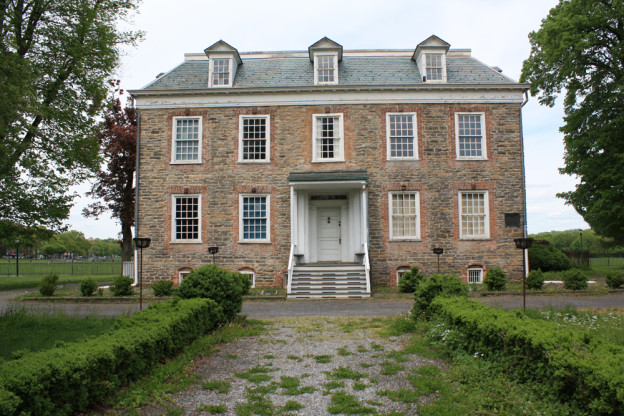
This fieldstone and brick Georgian style manor is The Bronx’s oldest house, built for Jacobus Van Cortlandt’s son, Frederick. He died before its completion, and was buried in the family burial plot on Vault Hill, north of the house. During the British occupation in 1776, Jacobus’s grandson, Augustus, serving as City Clerk, hid the municipal records in the house’s vault. George Washington used the house as a temporary headquarters before his triumphant march into Manhattan. Since 1897, it has operated as a house museum (the city’s first), with a collection of 18th and 19th-century art and furniture. The grounds include a bronze statue of Major General Josiah Porter and a window from the Rhinelander Sugar House, formerly located in Lower Manhattan. One of several warehouses where sugar and molasses imported from the Caribbean were stored before shipment to Britain’s refineries, the British used the Sugar Houses as prisons during the Revolutionary War, though it is not known whether Rhinelander was one of these. The Van Cortlandt Mansion was designated a New York City Individual Landmark in 1966 and Interior Landmark in 1975, it was added to the State and National Register of Historic Places in 1967 and was named a National Historic Landmark in 1976.
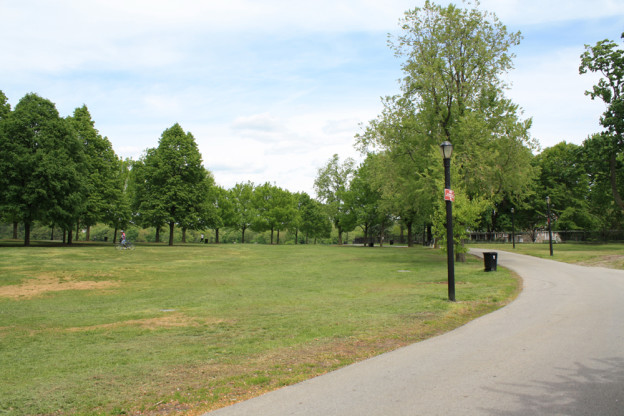
The current park is part of a large parcel acquired by the Dutch West India Company from the Wiechquaskeck tribe in 1639. It was owned by Adrian Van der Donck, New Amsterdam’s first lawyer, then purchased in 1670 by Frederick Philipse, New York’s wealthiest man. Philipse’s son-in-law, Jacobus Van Cortlandt, mayor of New York City in 1710-11 and 1719-20, purchased a part of the estate–the present park–in 1699. At that time, Tibett’s Brook was dammed to power two mills, forming the Van Cortlandt Lake, which still exists. The Van Cortlandts operated the mills and a grain plantation here. In 1778, British soldiers killed 37 patriot Stockbridge Indians in an ambush at the northeast end of the property. “Indian Field” marks their burial ground. After 140 years, the Van Cortlandts sold the property to the City in 1889. To transform it into a park, the City filled in swamps, planted trees and added recreational facilities, including the country’s first municipal golf course in 1895.
1888|
This park was also part of the expansive Morris estate until it was sold to Elliott and Anna Zborowski de Montsaulain, who named it “Claremont.” In 1859, they built a mansion and landscaped the grounds with terraced lawns descending toward Mill Brook (now Webster Avenue). When the property became part of the Bronx park system in 1888, many changes were made, including new paths, recreational facilities and the removal of orchards. The mansion briefly served as the Bronx Parks Department’s administrative headquarters, but was demolished in 1938 when the headquarters moved to a new building on Bronx River Parkway.
1888;
Herbert Magoon, Aymar Embury II and others, 1934-36|
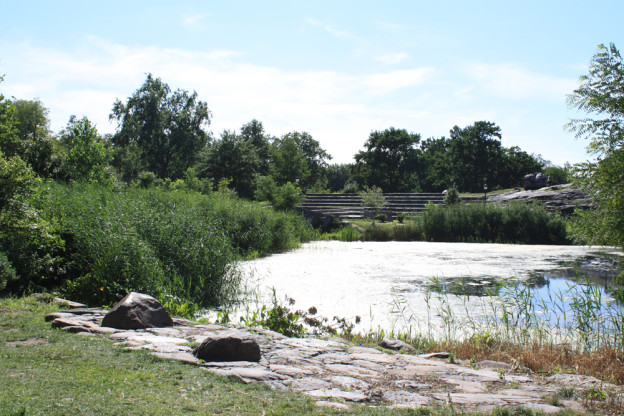
This park was originally part of the roughly 2,000-acre Morris estate, dating back to 1679.In 1848, Gouverneur Morris II (1813-1888) auctioned off much of his property to profit from the area’s suburbanization. This 127.5- acre parcel was sold to the Bathgate family, who owned it until 1888, when it was acquired by the City. Due to plans for numerous athletic facilities in the park, it was named after Croton, the ancient Greek city that was home to many Olympic champions. Indian Lake is a scenic highlight that the Bathgate family allowed the public to use for recreation before the property became public. Concrete walls and paths around the lake were installed in 1914. The boathouse was built in the 1940s under Parks Commissioner Robert Moses after a concession stand burned down on the site. Across the lake is a stone bridge and amphitheater, which was unveiled in 2009. The Crotona Play Center, a bathhouse and swimming pool at the park’s western edge, was constructed in the Art Deco style under the Works Progress Administration. It features a monumental arched brick entry with two square towers topped with glass-block skylights and an interior open-air courtyard. The Crotona Play Center was designated a New York CIty Individual and interior landmark in 2007.
1910;
c. 1925|
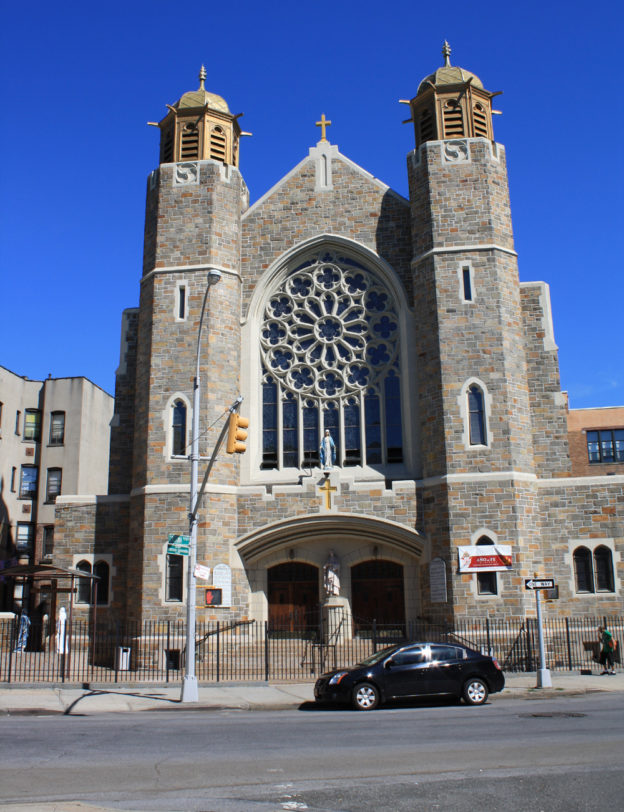
The Crotona Parkway Malls, between Crotona Parkway and Southern Boulevard, lend a pleasing atmosphere to the parkway. The City acquired the land for Crotona Parkway in 1888 to connect Crotona Park and Bronx Park. Southern Boulevard dates back to the 1870s, when it opened as a grand thoroughfare from East 133rd Street and Third Avenue to present-day Kazimiroff Boulevard. The pink granite obelisk at East Tremont Avenue is a memorial to the 87 people who lost their lives in a fire that destroyed the Happy Land Social Club across the street on March 20, 1990. At Fairmount Place is St. Thomas Aquinas Roman Catholic Church, whose Gothic Revival building lends elegance to this stretch of the parkway.
980 East 180th Street;
1905|
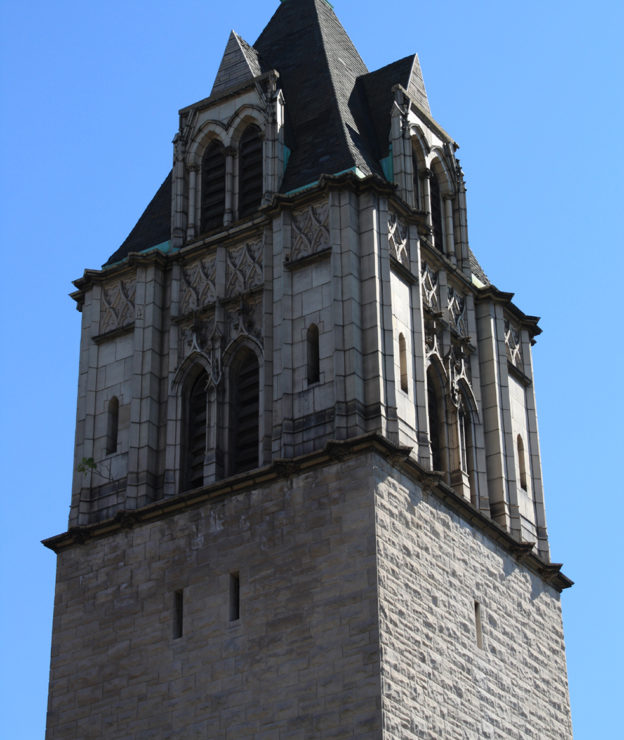
The congregation of this church dates back to 1815, when some of the roughly 300 inhabitants of West Farms Village formed the First Presbyterian Church. This is the church’s second building, funded by trustee Charles Bathgate Beck in memory of his mother. The Gothic Revival stone building features rectangular arrowslit openings that evoke a medieval castle. Its large, imposing terra-cotta-clad tower features a mansard roof with dormer windows and an ornate weathervane.
East 180th Street and Bryant Avenue|
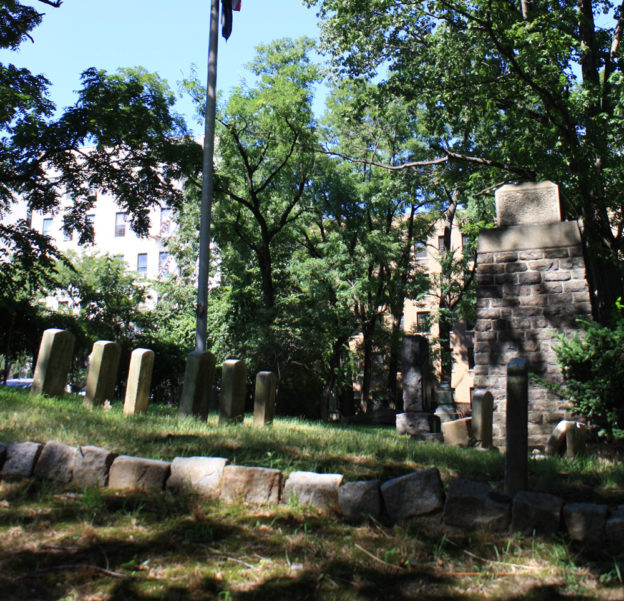
On East 180th Street is a nearly 200 year-old cemetery. The oldest public veteran’s burial ground in The Bronx, this roughly 2/3-acre plot contains 40 graves of soldiers who fought in four American wars: the War of 1812, the Civil War, the Spanish-American War and World War I. Founded by John Butler for a private burial, the Butler family owned it until the City took possession in 1954. The bronze statue of a Union Army soldier was erected in 1909. The plot is named after its location in what was then called West Farms Village, established in 1663. Street. The cemetery was designated a New York CIty Individual Landmark in 1967.
Inside River Park at East 180th Street and Boston Road|
River Park is within the southern tip of Bronx Park, and features this beautiful 13-foot waterfall. The falls were first modified into a dam to power mills along the river by William Richardson shortly after 1680. Later, some of the mills were owned and operated by the DeLancey family, Huguenots (French Protestants) who settled in New York in 1686. James DeLancey (1746-1804) was famously known as the “Outlaw of the Bronx” for his loyalist stance during the Revolutionary War, during which he led the “Westchester Chasseurs,” a group of Tory troops. After the war, his land was confiscated and he moved to Nova Scotia, where he became a prominent politician.
East 180th Street at Morris;
Fellheimer & Long with Allen H. Stem;
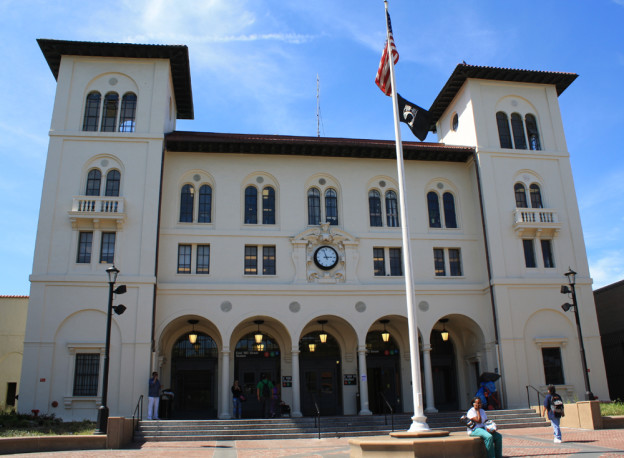
1912|
Located at the southern tip of Bronx Park, this Italian Renaissance style building was originally the administration office for the New York, Westchester and Boston Railway system. After the system went out of business in 1937, the City tied the Bronx portion of the line into the subway system. Since then, the building has served as the East 180th clock surround, which features a winged head of Mercury, the Roman god of travel. Architect Allen H. Stem simultaneously worked with Charles Reed to design Grand Central Terminal, whose grand Beaux-Arts style contrasts this Italian villa, just as midtown Manhattan’s urban environment contrasted The Bronx’s bucolic setting at that time. In 2011, the City undertook a major restoration of the building. Street station for the 2 and 5 subway lines. Of note in the center of the façade is the ornate. The Former New York, Westchester And Boston Railroad Administration Building was designated a New York CIty Individual Landmark in 1976 and is listed the State and National Register.