Archives

Harrison Street, Staten Island

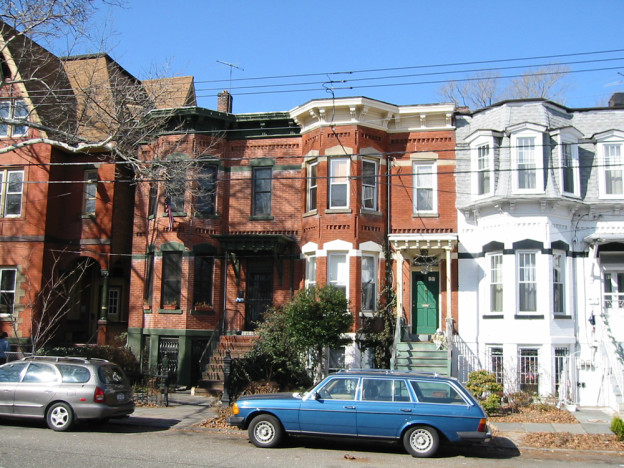
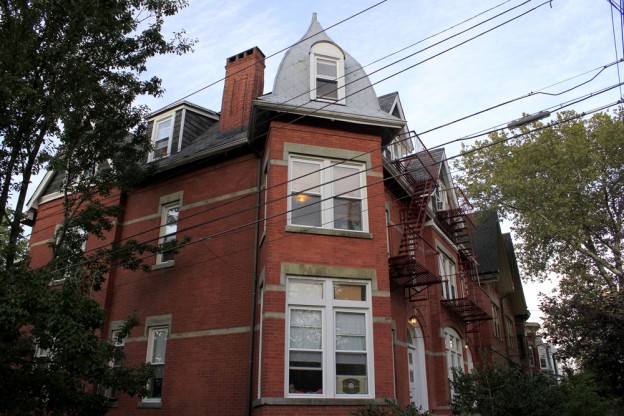
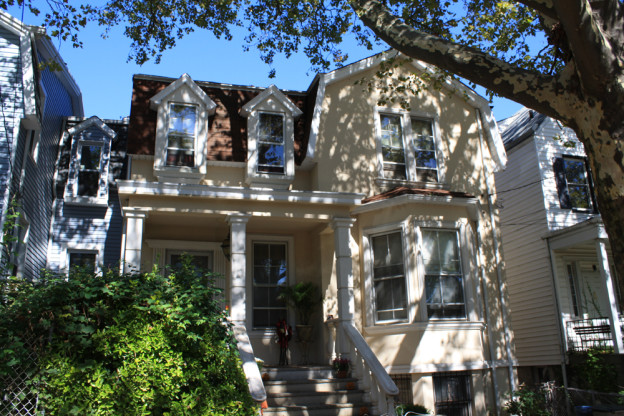
This single-block street in the north shore neighborhood of Stapleton encapsulates Staten Island’s 19th century residential character, projecting a strong sense of place. It features a rare grouping of intact wood frame and masonry houses, many boasting whimsical architectural features. At this time, there are just three historic districts on the whole island.

To learn more about Harrison Street click here

St. Paul’s Avenue-Stapleton Heights Historic District

Located to the northwest of Harrison Street is the St. Paul’s Avenue – Stapleton Heights Historic District, which was designated by the New York City Landmarks Preservation Commission in 2004. This district encompasses several lovely churches and 92 freestanding houses, plus smaller ancillary structures, which were largely constructed for prominent local businessmen and politicians. Built as a more wealthy enclave than Harrison Street, the houses are more elaborate in their size, massing and architectural detail. The neighborhood has long been one of Staten Island’s most prestigious places to live. Running through the district is St. Paul’s Avenue, an impressive stretch of residences that links the historic villages of Tompkinsville and Stapleton.

Development in the area began in 1826, when Caleb T. Ward purchased 250 acres, including the entirety of the historic district. Ward laid out streets and building lots in 1829. The two earliest houses in the district are 172 and 204 St. Paul’s Avenue , which date to the mid-1830’s. The former was originally the rectory for the first St. Paul’s Church (demolished 1870) and the latter was a private home built by James Creighton. Both were designed in the Greek Revival style, which was very fashionable at that time.

On hillside sites along the west side of St. Paul’s Avenue, a number of houses were built in the 1850’s and 1860’s to take advantage of views of New York Harbor. One of these was 218 St. Paul’s Avenue, which had originally been built in the Greek Revival style, but was renovated around 1850 for Ward’s son Albert in the Picturesque style. Across the street are St. Paul’s Memorial Church and Rectory (map: marker 4), built in 1866- 70. The church and rectory were designed by acclaimed church architect Edward Tuckerman Potter in the High Victorian Gothic style, and are noted examples of the style within the five boroughs. In addition to being part of the historic district, they are both designated individual landmarks. Also constructed in the mid-19th was “Captain’s Row,” three Italianate villas located at 352, 356 and 364 St. Paul’s Avenue, which were built by harbor pilots Marshall B. White, Thomas Metcalf and John Martino.

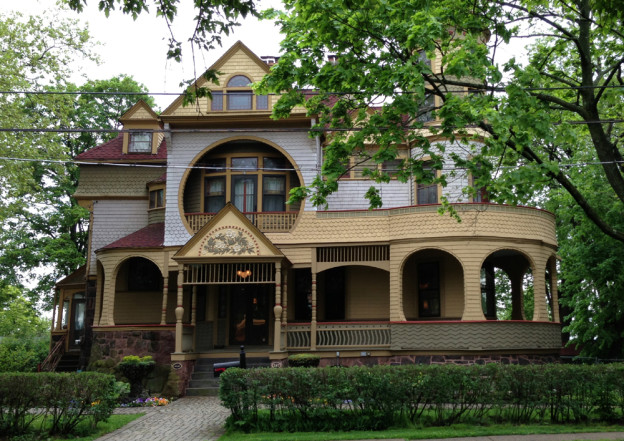
In the 1870’s through 1890’s, houses were constructed in popular styles of the time: Second Empire, Stick Style, Queen Anne, Shingle Style and Colonial Revival. One of the most spectacular houses on St. Paul’s Avenue, number 387, was constructed in 1886-87. The Queen Anne mansion was designed by Hugo Kafka and commissioned by George Bechtel, a brewer in Stapleton, as a wedding gift for his daughter, Anna Bechtel Weiderer and son-in-law Leonard Weiderer, owner of a glass factory in Stapleton. The wood-frame house features an imposing base of massive stone boulders, above which is a complex massing of geometric forms clad in shingles of varying shapes. Many of its multi-pane windows contain colorful stained glass.

Roughly a third of the houses in the historic district were constructed between 1906 and 1930 after designs by several Staten Island architects. This short period of growth lends an architectural cohesion to the one- and two-family neo-Colonial and Arts and Crafts Style houses on St. Paul’s, Cebra and Marion Avenues. Stapleton architect Otto Loeffler designed 11 of these houses, including the 1909 Mediterranean Revival style remodel of 377 St. Paul’s Avenue, originally constructed in the 1870’s, and 400 St. Paul’s Avenue, designed in the Arts & Crafts Style in 1908-09. Another contribution to the neighborhood in the early 20th century was Trinity Lutheran Church, founded in 1856 as the German Evengelical Lutheran Church. The Gothic Revival church, located at the corner of St. Paul’s Avenue and Beach Street, was designed in 1913-14 by Upjohn & Conable (Hobart B. Upjohn was the grandson of famed ecclesiastical architect Richard Upjohn).
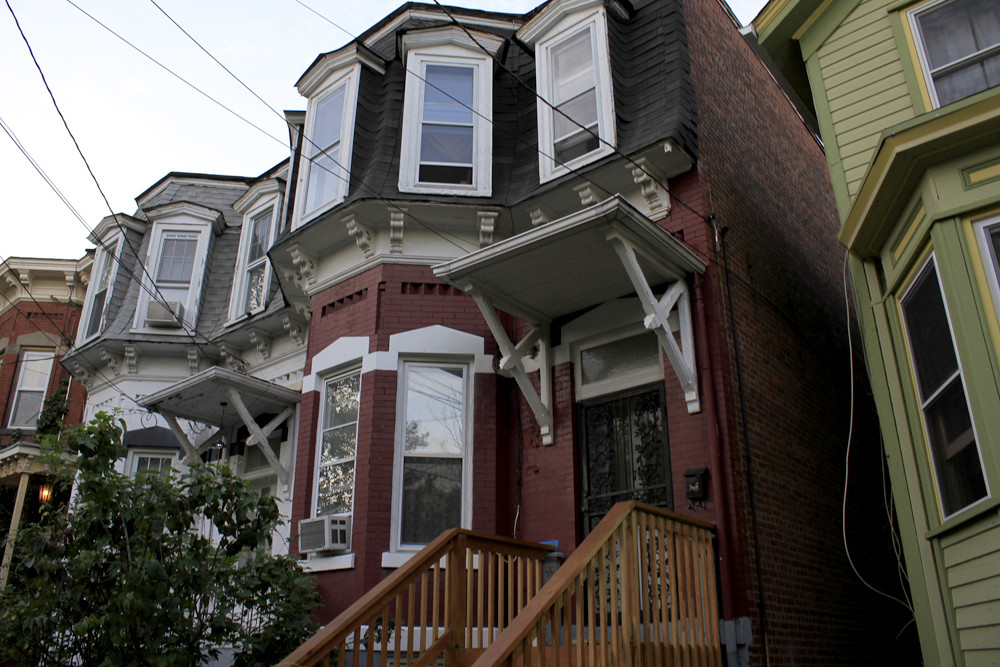
54, 50, AND 44 HARRISON STREET

James R. Robinson, ca. 1890;
ca. 1842;
Adrian R. and Peter Post, ca. 1858|

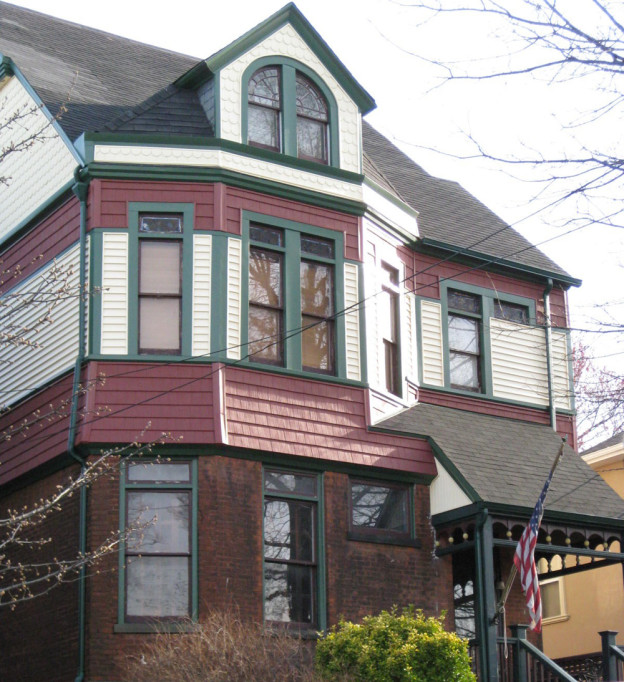
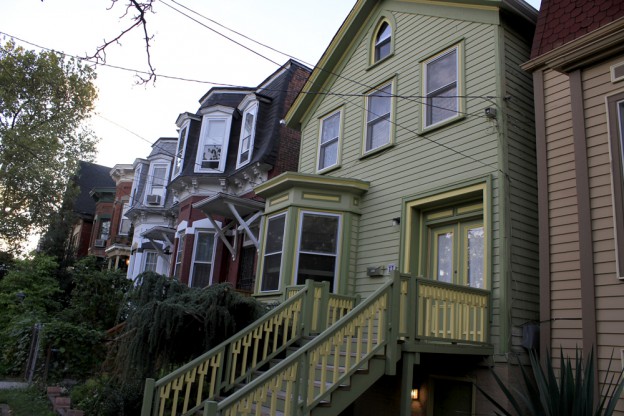
The Queen Anne/Shingle Style house at number 54 was built by carpenter-builder James R. Robinson, and has two stories plus a raised basement and attic. Each level is made of or faced with a different material, giving the house a rich polychromatic texture. A concrete base supports a red brick first story, which gives way to a painted clapboard second story. The pitched roof has a pitched dormer with an arched window, which caps a full-height projecting bay. The entrance porch features a sloping roof supported by intricate woodwork and columns. Number 50 was constructed for Jasper A. H. Britton, a gentleman farmer who purchased several other lots on the street. Britton’s son, Nathaniel Lord Britton, was the founder and first director of the New York Botanical Garden. Number 44 was the home of carpenter-builders Adrian and Peter Post. It features a wrap-around porch with Ionic columns and a rail fence, pitched gables with overhanging eaves and a double door.

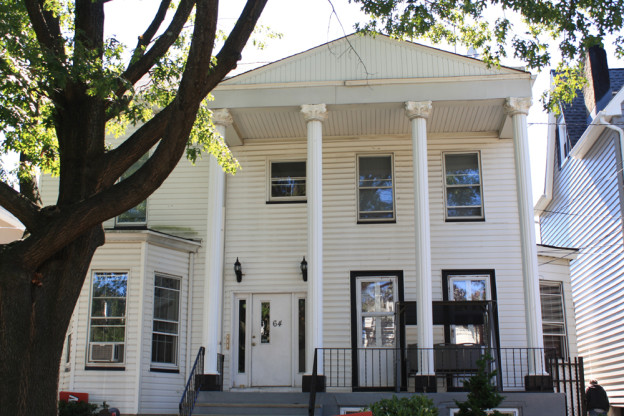
64 HARRISON STREET

ca. 1846|

This Greek Revival house was built for Edward and Amelia Blake, owners of a general store in Clifton, a neighborhood just south of Stapleton. The most prominent feature of the house is its front porch, whose four fluted columns span the building’s two stories. They are capped with Corinthian capitals, upon which sits a triangular pediment. The porch once had a landing on the second floor, as well, and both the second floor and ground level landings had rail fences.

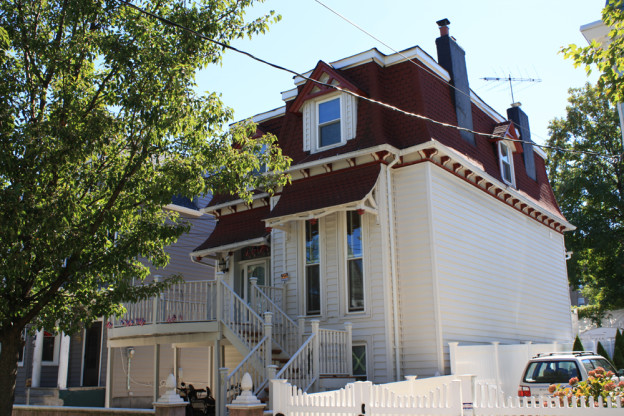
74 AND 70 HARRISON STREET

William R. Eddy, ca. 1874;
ca. 1868|

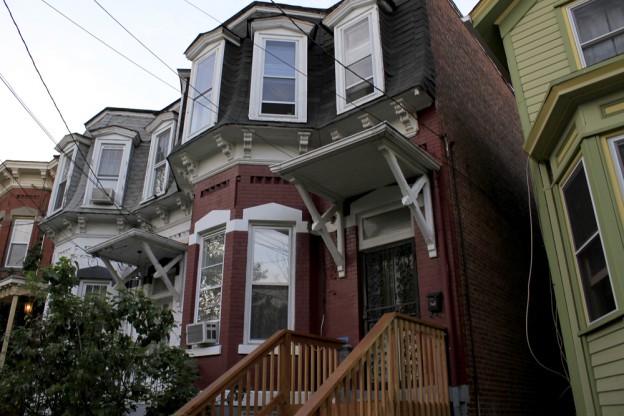
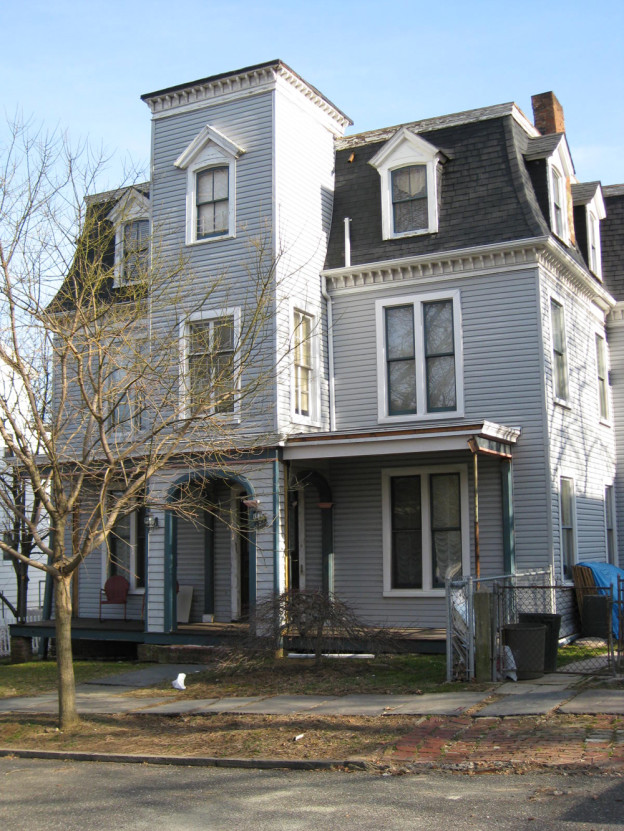
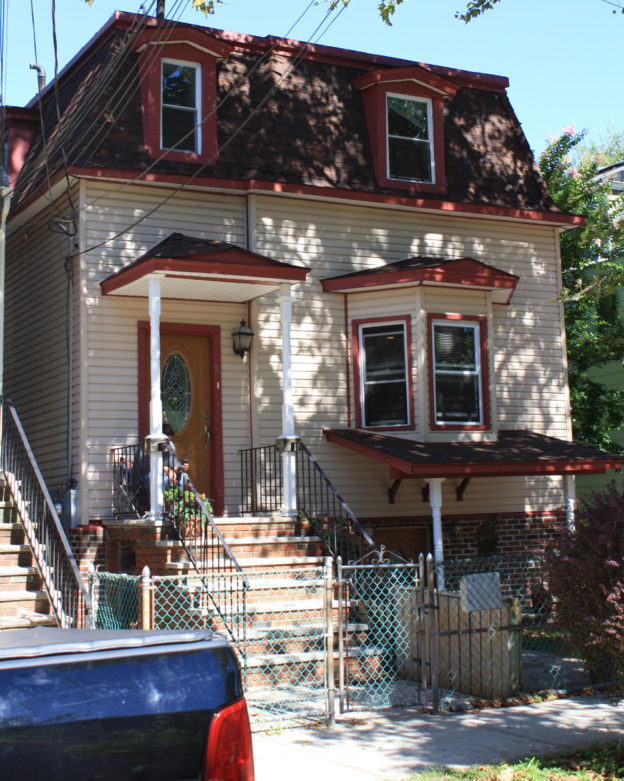
Number 74 was built by William R. Eddy, who lived here with his wife Mary until 1907. Later, the publisher of The Staten Islander, Michael Kane, lived here for about 20 years. The house features a steep mansard roof, dormers, a bracketed cornice, a fanciful Victorian entryway and a projecting bay along its three stories. Number 70 was constructed for Michael S. Tynan, a coal and wood dealer in Stapleton who also owned a local entertainment center called Tynan’s Hall and served as President of the Village of Edgewater in 1882-83. The house was designed in the French Second Empire Style and features a steep mansard roof, pitched dormers with decorative woodwork, a bracketed cornice and sloping window overhangs.

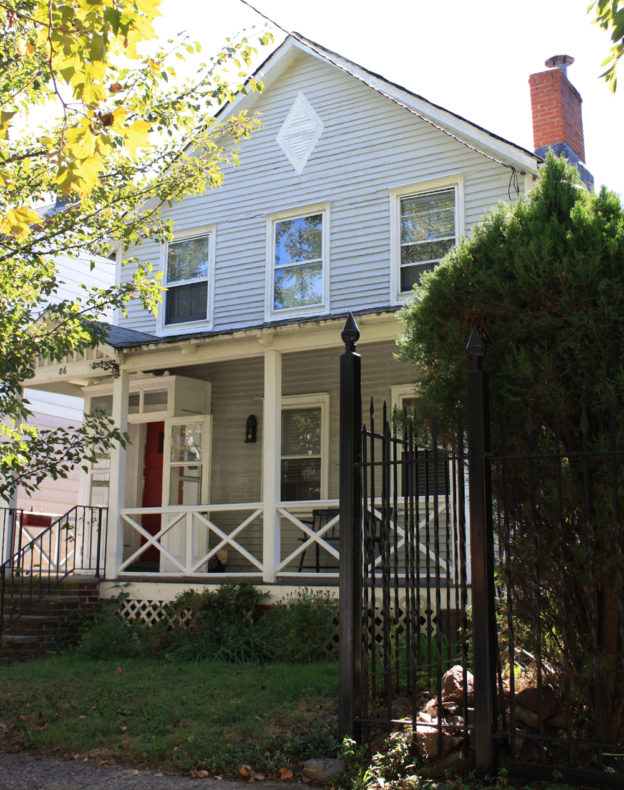
84 HARRISON STREET

ca. 1845|

This house was built for James R. Boardman, a local physician and director of the nearby Seamen’s Retreat. Mr. Boardman did not live here, but may have rented out the property. The house’s features, which are very intact, include a porch with an “X” pattern railing and a gable roof above the entry stair; three windows on the second story with a diamond medallion and gable roof above; and transom windows above the front door.

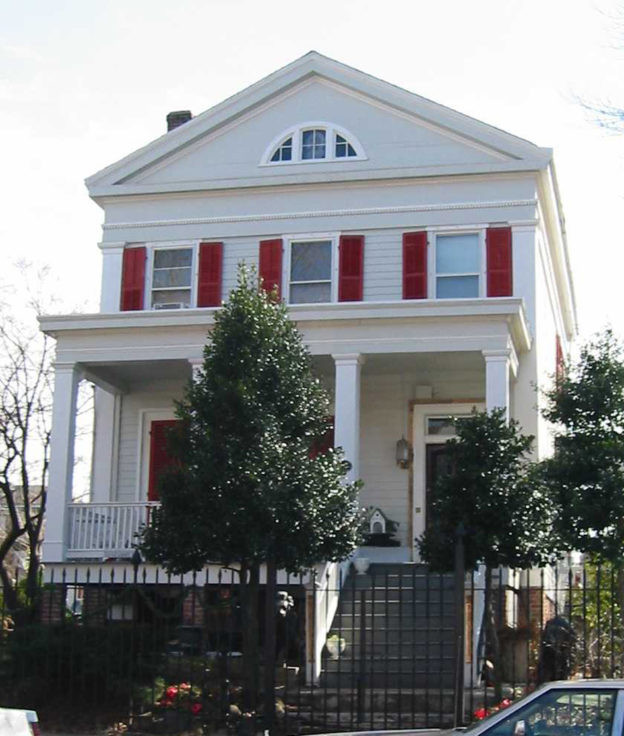
92 HARRISON STREET

ca. 1840|

The 92 Harrison Street House is an exceptionally fine and remarkably intact example of the vernacular Greek Revival style and representative of the first period of development as Harrison Street was transitioning into a village enclave.

Thought to be the oldest on the street, constructed around 1853-54 for Richard G. Smith, most likely as an investment property, the 2½ story clapboard house is sited on a large lot at the junction of Harrison and Quinn Streets making it a focal point for the immediate neighborhood. One of ten houses constructed on Harrison Street prior to 1860 as Stapleton was transitioning into a denser neighborhood, the 92 Harrison Street House is the only example of the temple form design on the street.

48, 52, AND 54 QUINN STREET

Philip Wolff;
1894|

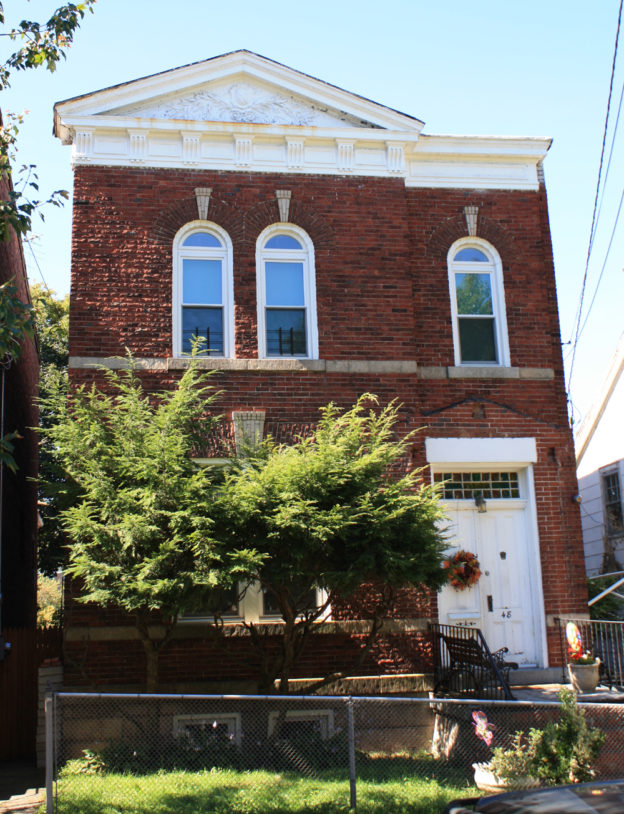
Also constructed by Philip Wolff, these three Colonial Revival houses form a lovely bookend to Harrison Street. The two-story brick houses each have three bays, with two situated on projecting sections that are capped with white triangular pediments. Unfortunately, the pediment on number 54 has been removed. Number 52 has retained some of the decorative cresting along its roofline. The houses feature stone bandcourses, brick window lintels with keystones, square windows on the ground level and arched windows on the second-story level. While the entry porch has been removed, number 48 has retained its stained glass transom.

83 AND 85 HARRISON STREET

ca. 1877|

Built for Samuel and Isabella Cassidy, owners of a dry goods store on Bay Street, these houses were owned and occupied by the Cassidy family for over 60 years. The houses feature bracketed cornices, projecting bays, decorative brickwork, columned porches and stone band courses and window lintels.

71, 73, 75, HARRISON STREET

Adrian R. and Peter Post, 1868;
ca. 1885;
Adrian R. and Peter Post, ca. 1868|

For roughly 40 years, William M. Mullen, a lawyer who practiced in Staten Island and Manhattan, resided at number 73 and owned numbers 71 and 75 as rental properties. Mullen commissioned his own house, which, at three stories over a raised basement, is taller than its neighbors and features a full-height projecting bay and a gabled roof. He purchased the two rental properties in 1891. Both were built by the Post brothers and feature the brothers’ signature mansard roof, as well as dormers, projecting bay windows and columned entry porches.

77 HARRISON STREET

ca. 1883|

Built for newsdealer Sarah Wood, this house has retained its original details, including a decorative railing on the porch and staircase and a Gothic arched window at the attic story. The house features a gable roof and a bay window with decorative wood work.

87-89 AND 93-95 HARRISON STREET

Philip Wolff;
ca. 1883|

These brick apartment buildings are the work of Philip Wolff, a builder and mason who ran a business with his son, Charles L. Wolff. The company is understood to have laid many of the sidewalks in Stapleton. They also constructed many houses in the area, including 48, 52 and 54 Quinn Street and 80 Harrison Street. Number 87-89 has two central projecting bays with steep gable roofs and groups of three windows on each level. The window groupings on the ground level have bracketed wood overhangs and stone quoin surrounds. These projecting bays are flanked on either side by wings containing arched entryways with columned porches. The entire building is capped with a mansard roof and a bracketed cornice. Number 93-95 features a prominent onion-shaped corner turret with an arched dormer. The mansard roof also has four dormers of different sizes and a wide chimney with decorative brickwork. The lower stories have stone bandcourses, window lintels and sashes, as well as arched brickwork entrances with keystones and double doors with glass transoms.

79 AND 81 HARRISON STREET

ca. 1877|

Built for Samuel and Mary Ann Anderson as rental properties, these two houses are twins which share a party wall. They feature a very steep mansard roof along the entire second story with long rectangular dormer windows that dominate the façades. Between the first and second stories are bracketed cornices. Both houses are fortunate to have retained their fanciful door hoods.

59, 63 AND 67 HARRISON STREET

Adrian R. and Peter Post, ca. 1870;
William R. Eddy, ca. 1868;
Adrian R. and Peter Post, ca. 1869|

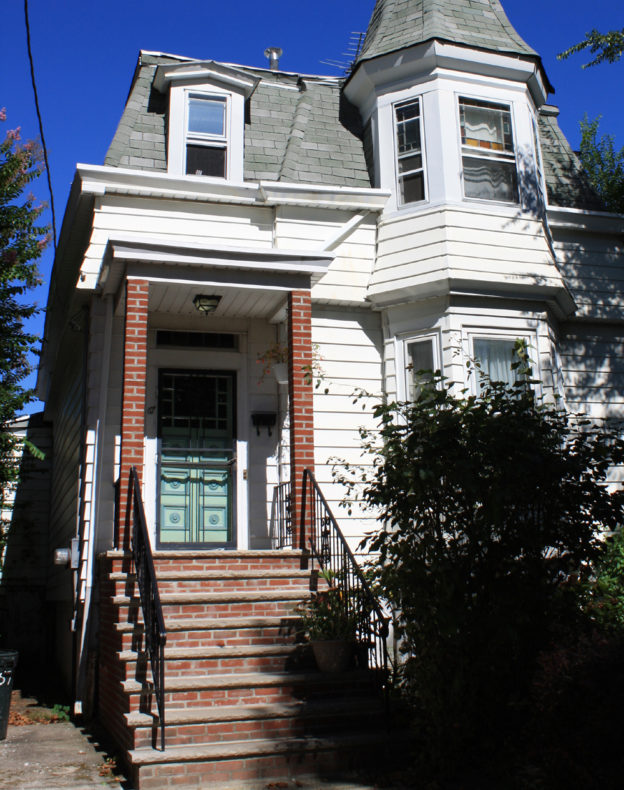
Carpenter-builders Adrian R. and Peter Post were responsible for several houses on Harrison Street, including numbers 59 and 67. They also constructed numbers 44 (their own residence), 58, 71 and 75. Number 59, constructed as a rental property, features a mansard roof, dormers and a columned entry porch. Number 67, a speculative project, features a mansard roof and a projecting full height bay topped with a tall, narrow, polygonal turret. The windows in the turret have their original stained glass. Number 63 was built by William R. Eddy, who sold it to a veterinary surgeon named William Rose in 1872. Like its neighbor at number 59, it has a mansard roof, dormers and a columned entry porch, as well as a projecting bay window at the ground level.

53 HARRISON STREET

Charles Schmeiser;
1880|

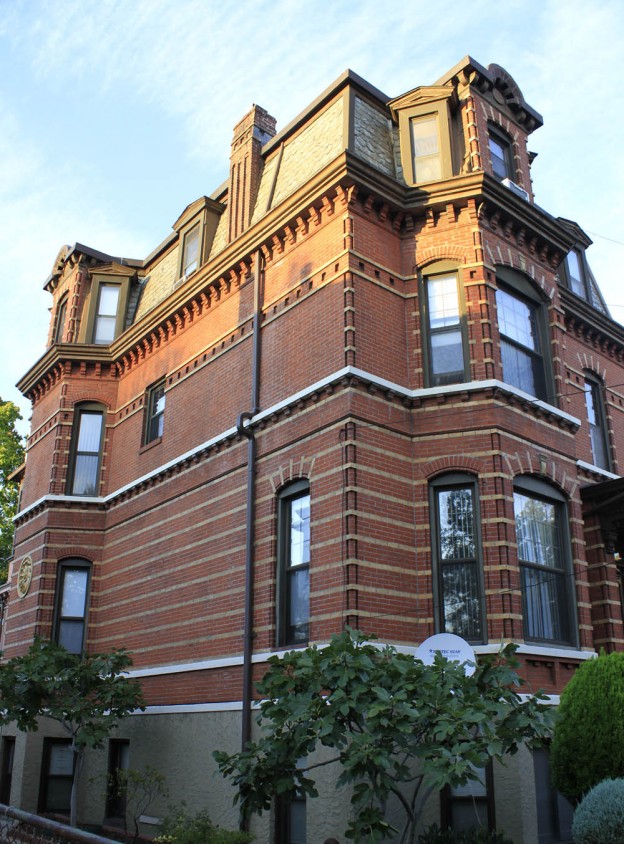
Designed in the Second Empire style for Henry Warth, this house has a steeply pitched slate mansard roof and polychrome striped brickwork. Note the terra-cotta medallion on the building’s west façade. This is the only house on the street with a registered architect. In addition to that distinction, this graceful house stands out for its height (three stories plus a basement level) and that there are no houses abutting it on either side, lending a stately air to its presence on the street. Owner Henry Warth was the brewmaster of the local Rubsam & Horhmann Brewery in Stapleton. His father, Albin Warth, was an inventor who held over 150 patents.

45 HARRISON STREET

James P. Eddy;
1875|

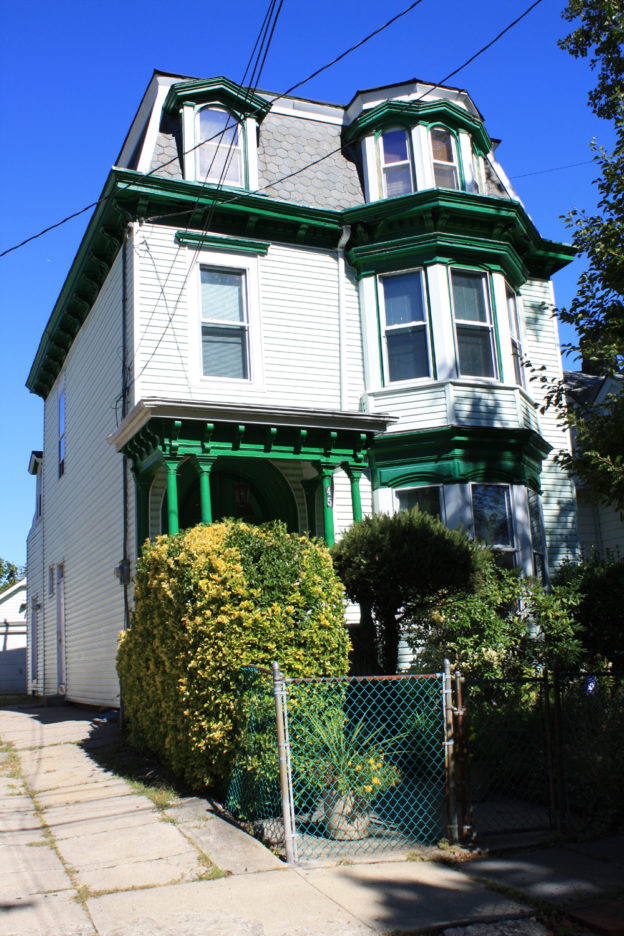
This house was built by James P. Eddy, whose brother William and father Cornelius also owned houses on the street at number 74 and 36, respectively. Together, the three men owned and operated a lumber yard on Bay Street in Stapleton. Like the houses of his relatives, James’s house features a mansard roof, dormers, a bracketed cornice and a prominent full height projecting bay along its three stories. Its design is very similar to number 74 across the street. The entry porch features an overhang with bracket supports and paired columns. While some of the houses along Harrison Street have undergone renovations, the house next door at number 49 is the youngest on the street, built in 1940.

35, 37 AND 41 HARRISON STREET

Winslow Robinson;
ca. 1875-76|

These three houses share the same general massing and roof gable outline. It is known that numbers 37 and 41 were built by carpenter-builder Winslow Robinson, so it can be surmised that he was most likely responsible for number 35 as well. Number 35 was built for druggist Benjamin T. Jacobs and numbers 37 and 41 were built for real estate and insurance broker William Robinson. A small annex now connects numbers 35 and 37.

MT. SINAI UNITED CHRISTIAN CHURCH- STAPLETON CAMPUS

2 Tompkins Street;
1894|

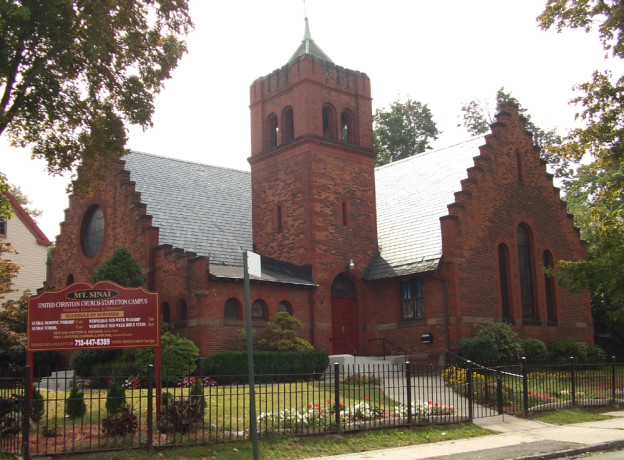
Originally the First Presbyterian Church, this Dutch Colonial Revival building features dark masonry with arched window openings surrounded by quoins, a square crenellated tower and large stepped gables. The Brownell Street gable includes a small rose window. The building is gracefully situated on a corner lot surrounded by lawns and an iron fence.