Archives

Gowanus, Brooklyn

The Brooklyn community of Gowanus, centered around the Gowanus Canal, is largely made up of historic architecture directly related to the water route. Located between Park Slope and Carroll Gardens, it is considered part of Brooklyn’s industrial waterfront. The canal itself is 2.5 miles long, 100 feet wide, and stretches from Gowanus Bay in New York Harbor to Douglass Street. Unlike other industrial areas of the city, Gowanus was never densely built up, and much open space remains today. The structures that surround the canal are generally six stories or fewer, lending a low-scale, 19th-century character. This area continues to be mixed-use manufacturing with peripheral residential enclaves.

Historically one of New York’s most contaminated waterways, the Gowanus Canal area was designated as a Superfund Site in 2010. To protect the historic character of the neighborhood the local community is currently working to place the Gowanus Canal Corridor on the National Register of Historic Places so that its urban industrial character is preserved.

To learn more about Gowanus click here
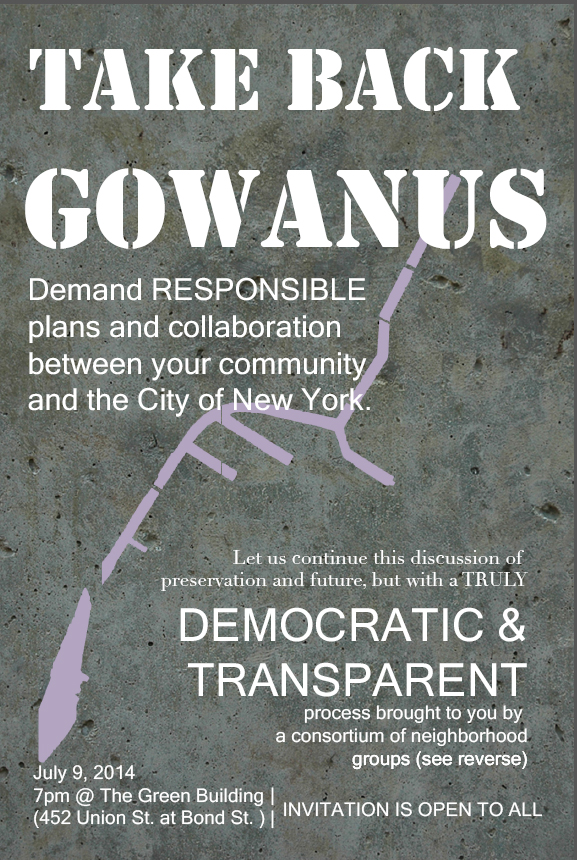
Disparate factions unite to ‘take back’ Gowanus from overdevelopment

By Matthew Taub
Special to Brooklyn Daily Eagle from Brooklyn Brief

What do a self-styled “provocateur,” a mohawked leather jacket punk rocker, a dredger, a cartographer, a cane-wielding rabble rouser, a public housing advocate and a sprinkling of neighborhood homeowners, preservationists, attorneys and industrial workers all have in common?

Council Member Brad Lander has somehow convinced them to band together–against him, and developers interested in the Gowanus canal.

“Lander’s whole process was rigged to create a forced consensus to give the developers a green light to go forward,” said Debbie Stoller, a resident of Gowanus for 11 years. “This meeting is meant to set that straight.”

She was referencing “Take Back Gowanus,” a meeting Wednesday night of local residents frustrated after their City Council member’s recent “Bridging Gowanus” three-part series failed to live up their democratic ideal, despite a claimed intention of fostering community engagement about the future of the neighborhood.

The event was hosted by local resident Joseph Alexiou, whose concerns about the one-sided, pro-development tone and direction of Lander’s meetings–concerns he claimed he addressed to the council member directly–went unanswered.

“I’m grateful to council member Lander,” Alexiou said, “but his process was not democratic, and not inclusive. It was downright misleading. We never had a chance to voice our concerns.”

The “take back” meeting–held at the upscale 501 Union Street venue at Alexiou’s expense–brought forth a range of ideas from local residents.

To Read the Whole Article Click Here

Gowanus State and National Register Listing

GOWANUS

THE CANAL THAT
BUILT BROOKLYN

THE CREEK THAT
SAVED OUR NATION

Gowanus: National Registry of Historic Places, Eligible Since 2006.
Gowanus: filled with amazing history.
The Listing to National and State Registries, sponsored by FROGG,
will bring economic redevelopment tax incentives to the district
for owners who voluntarily choose to participate in renovation and
redevelopment of properties.
Support of the Historic Registry Listing is to
support the future of Gowanus.

Please contact Mayor Bill de Blasio and tell him to let the State Review Board vote on the Gowanus Canal Historic District.
http://www.nyc.gov/html/static/pages/officeofthemayor/contact.shtml

Tell him to: Please permit the NYS Review Board to vote on the Gowanus Canal Historic District. Listing the area on the National Register of Historic Places will only encourage economic development and investment in the neighborhood. This is a community-driven plan which is business and development friendly, and lifts the community up by acknowledging the Canal’s importance in the development of our city. There are no
new regulations or requirements which will be triggered by this designation, only the possibility of incentives to development.
(you have a maximum of 300 words)

Read the full article on HDCs website here or View the FROG PDF here

333 CARROLL STREET

19th century|

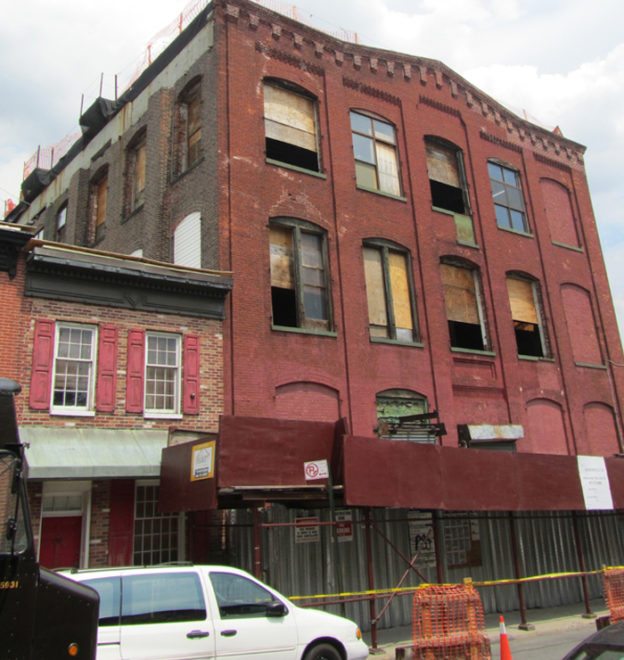
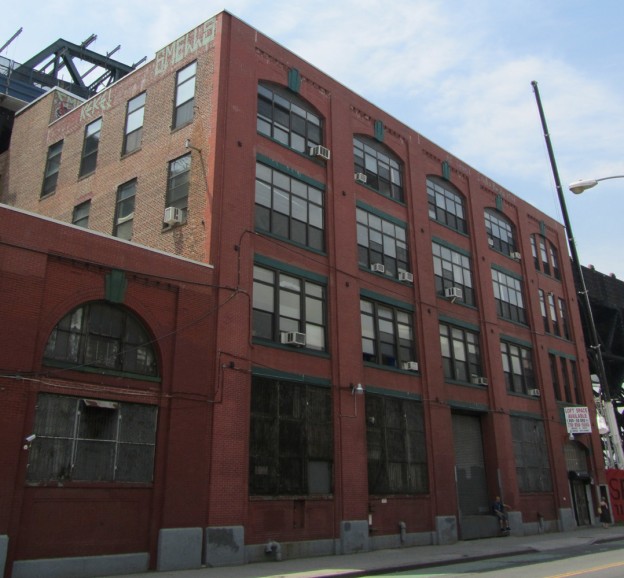
This former shoe factory is a symbol of triumph for preservation in the neighborhood. A controversial project that would have converted the old factory to condos included an out-of-scale rooftop addition that was found to be an illegal extension and would have had a negative impact on the block and the neighborhood. A Stop Work Order was issued in September of 2006, and the large steel addition has since been removed from the top floor of the historic building. This project led to community demand for a downzoning, and the building currently sits waiting to be appropriately redeveloped.

CARROLL STREET BRIDGE and ENGINE HOUSE

Brooklyn Department of City Works;
Robert Van Buren, Chief Engineer;
1888–89|

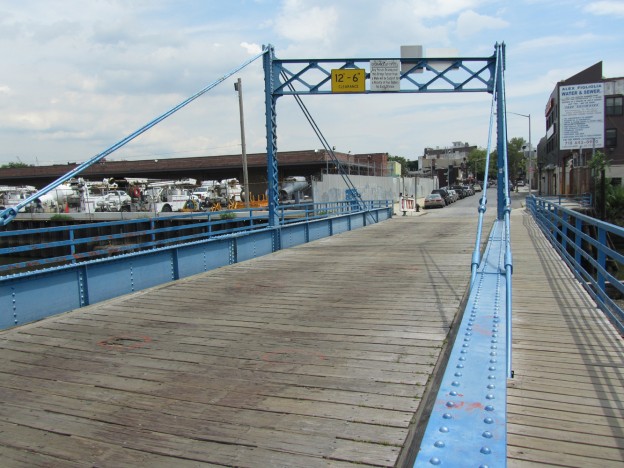
The Carroll Street Bridge, a New York City individual landmark, is one of four of the oldest retractile bridges in the United States. It continues to operate today essentially as it did when it first opened. The bridge rolls horizontally on wheels on steel tracks to allow shipping to pass. The bridge is drawn in and out by cables from the engine or operator’s house on the west side of the canal and opens a 36-footwide channel in the canal. There is an original Belgian block approach, and the bridge is wooden-planked. From the bridge, one can view the wooden cribbing along the banks of the canal. The canal was originally constructed all of timber cribwork laid horizontally, dating from 1866 to 1930.

2ND STREET ROWHOUSES

57–97 2nd Street;
1880s|

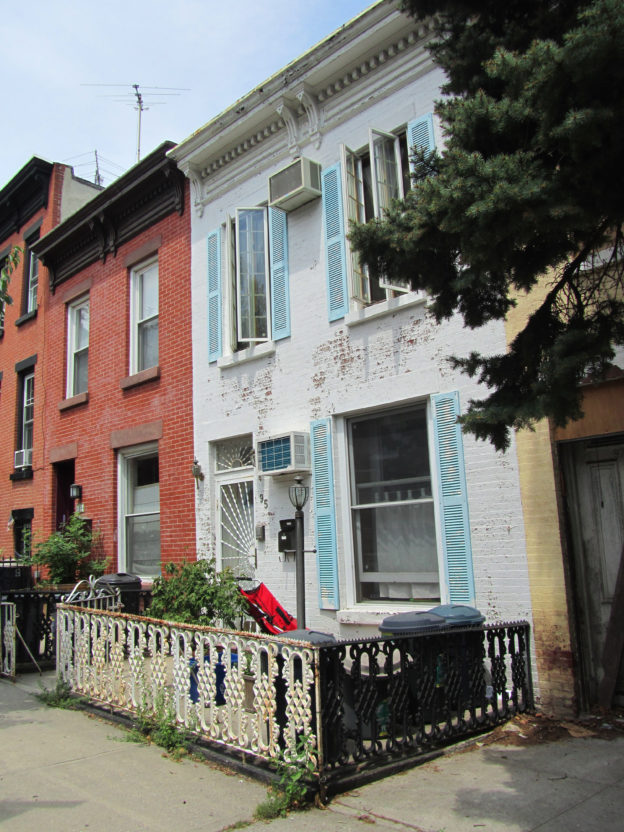
These brick rowhouses contain a high degree of historic integrity, such as original wood cornices, sandstone lintels and sills, and ornate cast-iron gates and fences. This row is especially interesting because the houses rise only two stories, as opposed to the three and a half that is typical of the neighborhood.

4TH STREET ICEHOUSE AND BREWERY COMPLEX

4th Street and Hoyt Street;
1904–ca. 1930s|

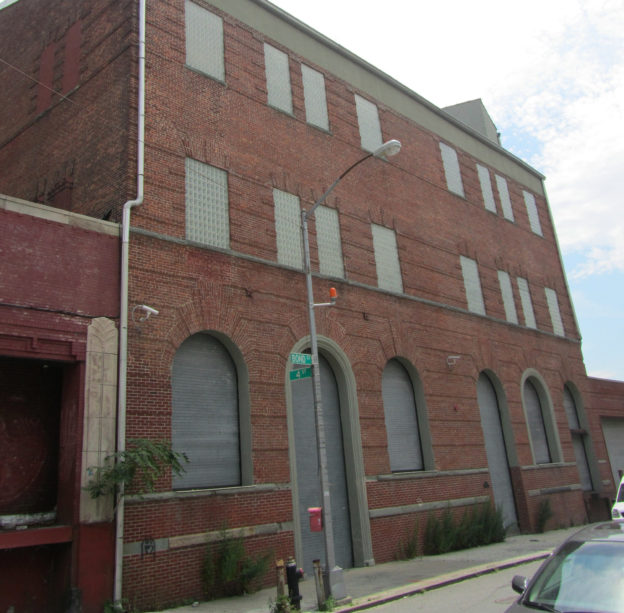
The earliest company known to have occupied this complex was the Empire City Hygeia Ice Company in 1904. Two years later a six-story building was also constructed, serving the Leonard Michel Brewing Company and containing a brewhouse, ice storage and freezing tanks. By 1939 the entire complex was occupied by the Ebling Brewing Company, but since 1950 the complex has not been affiliated with beer or brewing.

9TH & 10TH STREET SUBWAY VIADUCT

1933|

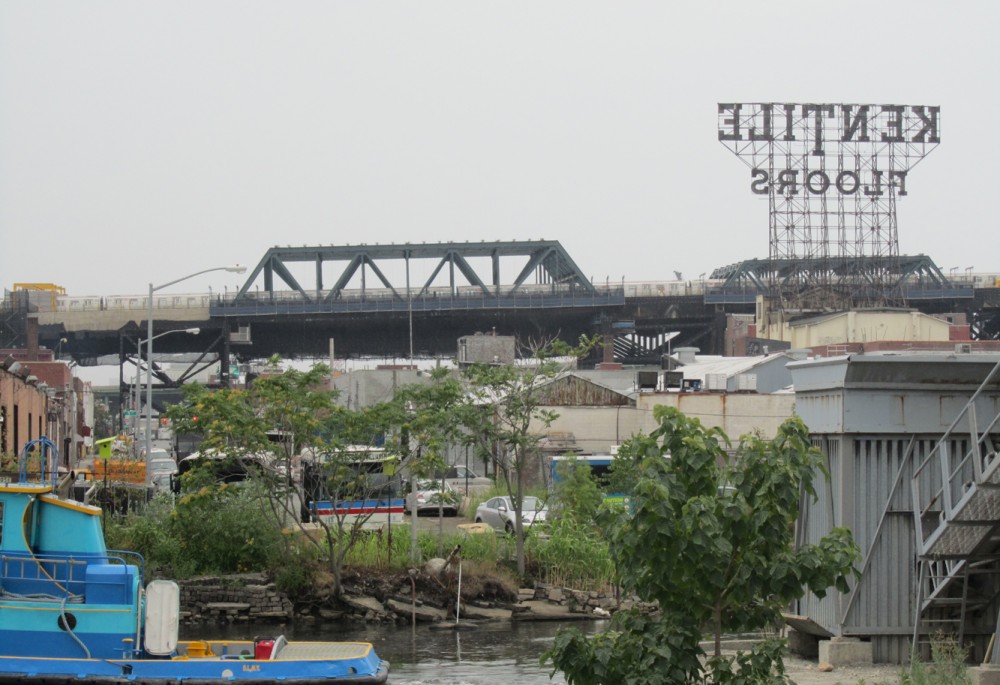
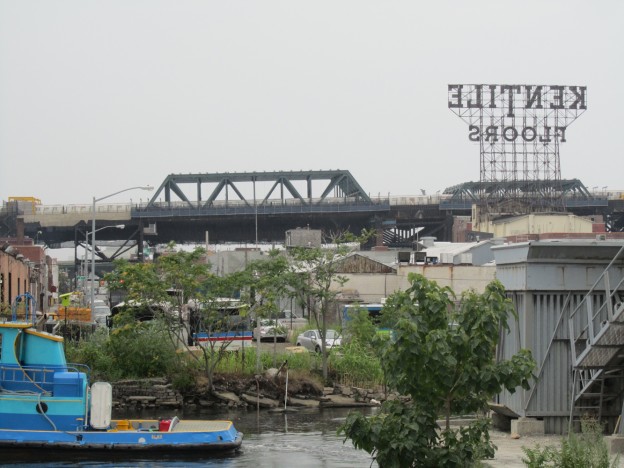
This 4,400-foot-long steel trestle was completed in 1933 to carry the IND subway. The viaduct, which houses the Smith/9th Street subway stop, crosses the Gowanus Canal and, at 87½ feet above the canal, is the city’s tallest. Beneath the viaduct is a beautiful vista looking north along the canal. The shape of the waterway bending north retains that of the 19th-century commercial waterway, and its docks, basins, bulkheads and industrial buildings are still used today.

T. H. ROULSTON, INC.

70–124 9th Street;
ca. 1910|

Thomas Roulston was the son of an Irish immigrant who was a grocery-clerk-turned-owner in Brooklyn. By 1888, Roulston owned three groceries, and this lot was purchased for the construction of a large grocery warehouse. The building served as the central warehouse for the Roulston company, which grew to more than 300 stores in the five boroughs. The building and the business were sold after his death in 1951 by his son. All of the buildings in this complex were built at the same time and are Renaissance Revival in style with corbeled cornices and segmentally arched windows.

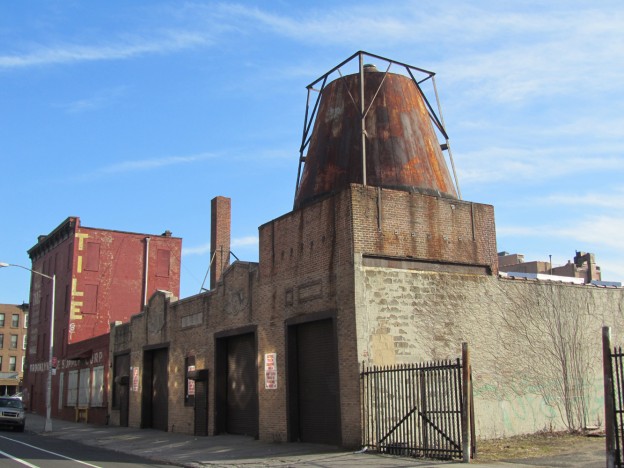
KENTILE FLOORS SIGN

9th Street and 2nd Avenue;
1949|

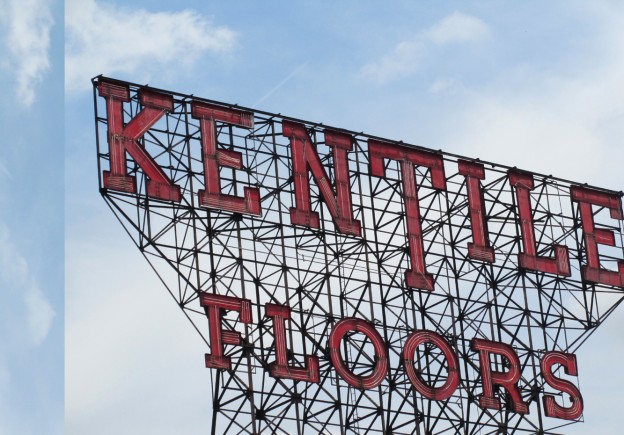
The Kentile Floor Company, founded by Arthur Kennedy in 1898, opened its third location here in 1949. Kentile was a pioneer in the “do-it-yourself ” industry of home improvement. Advertisements featured housewives putting in the floor tiles themselves, implying the simplicity of installation. While Kentile has not been present here since the 1990s, the site is still used for manufacturing.

The sign was dismantled in 2014. The Gowanus Alliance is trying to erect the sign in another location.

BURNS BROTHERS COAL POCKETS

2nd Avenue;
1915–38|

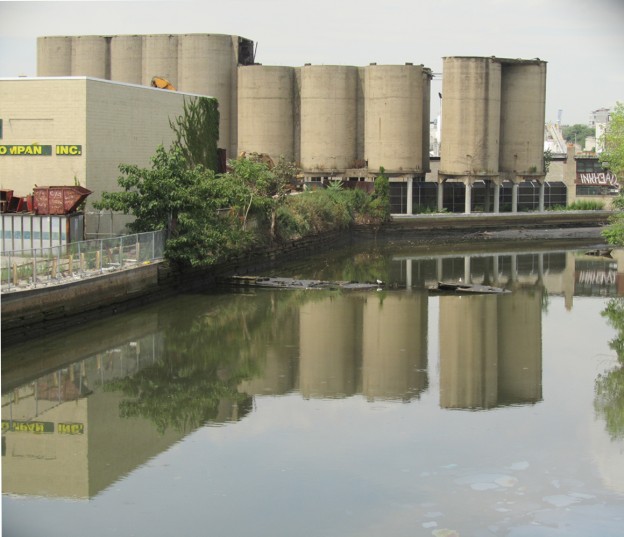
Coal was one of the major freights shipped on the canal in the 19th and 20th centuries. Initially, coal was used for domestic heating and cooking, and it later was burned to generate electricity. Coal pockets were used to move and store the coal from barges on the canal to wagons and, later, trucks for delivery. The eight pockets closest to the water were built between 1915 and 1924, and by 1938 there were 10 more. These 40 and 50-foot tall structures are no longer used today but remain as relics of the canal’s crucial transportation role.

EAGLE CLOTHING FACTORY SIGN

6th Street and 4th Avenue;
1951|

This sign hovers above what was once the Eagle Clothing Factory, which moved to Gowanus and built a brand-new factory here in 1951. The factory had many modern amenities such as adequate space and lighting, air-conditioning and a recreational roof garden. The company owned this property until 1989, and the sign remains as it has been for 60 years in this neighborhood.

The sign was removed in 2013.

SOMERS BROTHERS TIN BOX FACTORY (AMERICAN CAN FACTORY)

232 3rd Street;
ca. 1886|

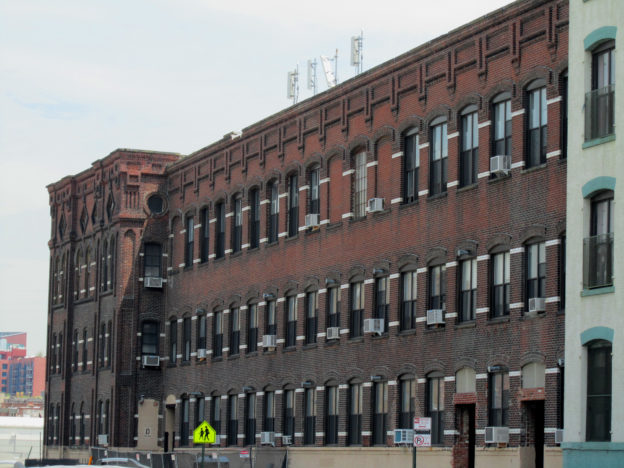
Within a year of its opening, this factory was producing 1,800 tin boxes per week and within a decade grew to be a company with more than 150 employees. Oil, pumped from iron tank boats on the Gowanus Canal, powered the factory. The company sold this location to the American Can Company in 1901. Today the building retains a functional use as spaces for designers, artists and manufacturers. Visually, it is a testament to Gowanus’ industrial past and its ability to adapt to serve current production needs. Sonic Youth recorded its first three albums at this complex.

NEW YORK & LONG ISLAND COIGNET STONE COMPANY BUILDING

370 3rd Avenue;
William Field & Son;
1872–73|

This New York City individual landmark is the sole survivor of a factory complex that originally was five acres large and spanned from 3rd to 6th Streets along the Gowanus Canal. It was constructed as the showpiece, and served as the office, of the New York & Long Island Coignet Stone Company, one of the first companies in the United States to industrialize the production of concrete. Not surprisingly, it is the oldest known concrete structure in New York City. The building features a poured-in-place foundation and original pre-cast concrete stones and blocks on the upper stories. It is also likely that the floors are reinforced concrete. The company was named for François Coignet, who patented Beton Coignet Concrete in France in the 1850s, and produced the material at this location. Concrete was cast in molds and was much more affordable than chiseling natural stone. A large-scale modern supermarket project surrounding the building was approved in 2012.

BRT POWERHOUSE

322 3rd Avenue;
1902|

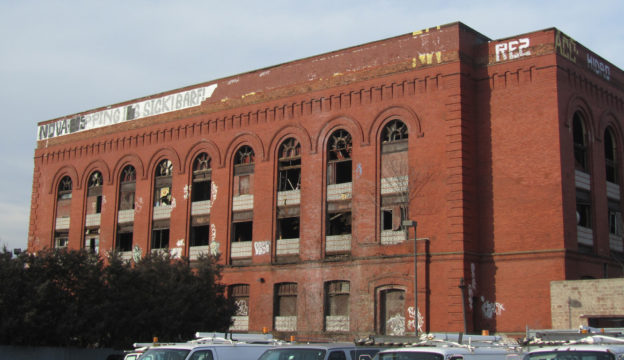
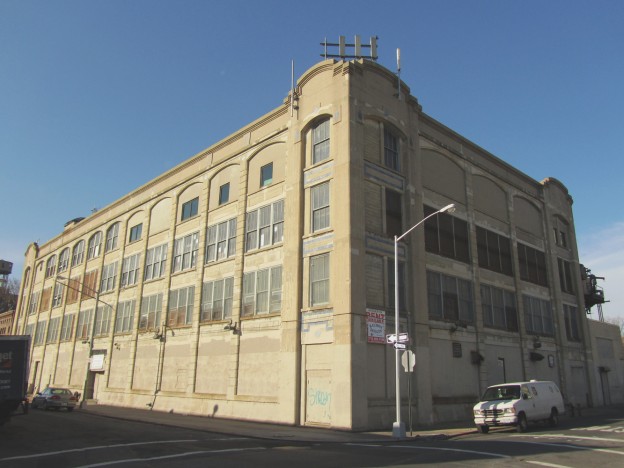
This massive eight-story Romanesque Revival style building served as the powerhouse for the Brooklyn Rapid Transit Corporation, or BRT. The BRT owned every steam railroad, elevated line and streetcar in Brooklyn at the turn of the 20th century, and this enormous building burned coal to generate electricity for all of the trains. Coal was fed from the canal bank via a coal elevator to a cement tunnel connecting the coal pit and the larger boiler building. The currently vacant building, the only remnant of what originally was an extensive complex, is under threat by neglect and abandonment.

450-460 UNION STREET

aka The Green Building;
Ca. 1948|

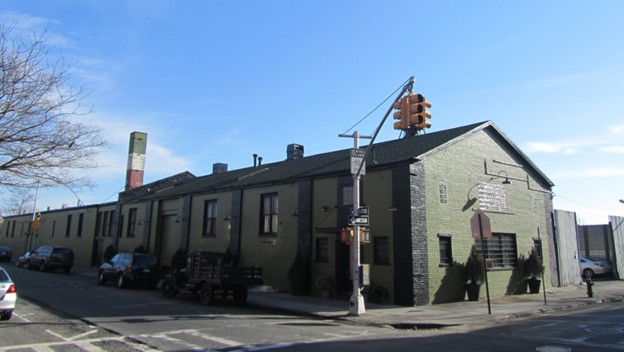
This site has hosted a variety of industry since the Gowanus first began to operate shortly after the Civil War and is reflective of how long industry has characterized the area. It was previously home to Thomas Paulson & Son, a brass foundry. In 2002, plans were made for the demolition of the building and its subsequent replacement with a luxury residential tower. After much community outcry and two years of discussion with the Board of Standards and Appeals, the site was not granted a residential rezoning and the building was saved. The building is being adaptively reused as an event space and serves as a symbol of the strength of the Gowanus community’s determination to preserve its industrial heritage

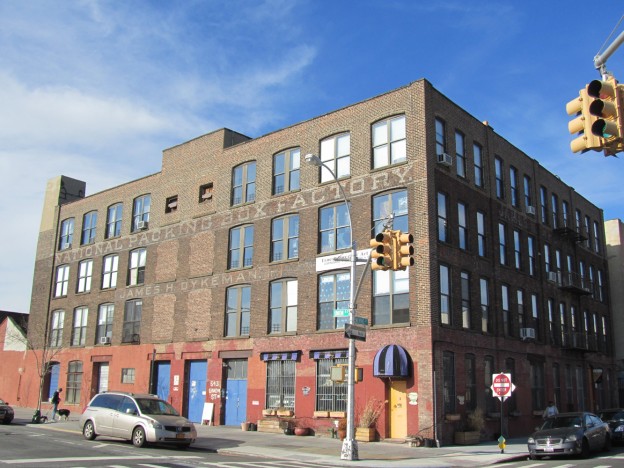
NATIONAL PACKING BOX FACTORY

543 Union Street;
Robert Dixon;
ca. 1910|

James A. Dyckeman commissioned architect Robert Dixon to construct this industrial building for his box factory. Eventually the business increased and became a five building complex. A portion of this building burned in 1932, and by 1936, Dyckeman’s company was bankrupt. Other industries that have operated here include brass and cabinet manufacturing. The building is still in use today and is currently home to Proteus Gowanus, an interdisciplinary gallery and reading room. Housed within Proteus is Gowanus Hall, a museum dedicated to the history of the canal itself.

EUREKA GARAGE

638–44 Degraw Street;
1923|

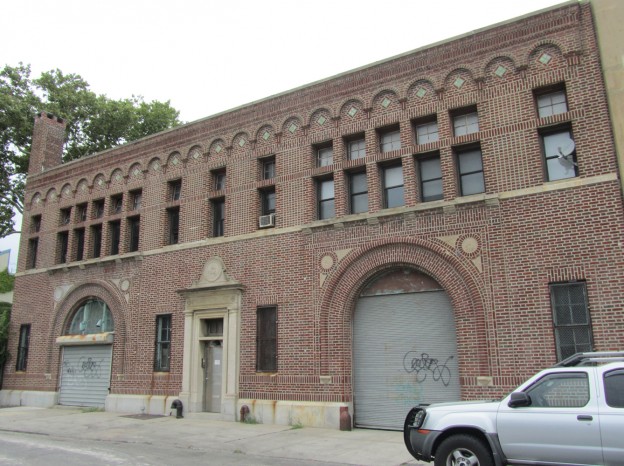
This auto garage on the south side of Degraw Street is a survivor of the early presence of the automobile in New York City. Eureka shops were an early chain of automotive repair establishments. The building is constructed of tan brick laid in Flemish bond with decorative panels featuring automobile tires with wings, evidencing the building’s original use. The façade is largely original and intact.

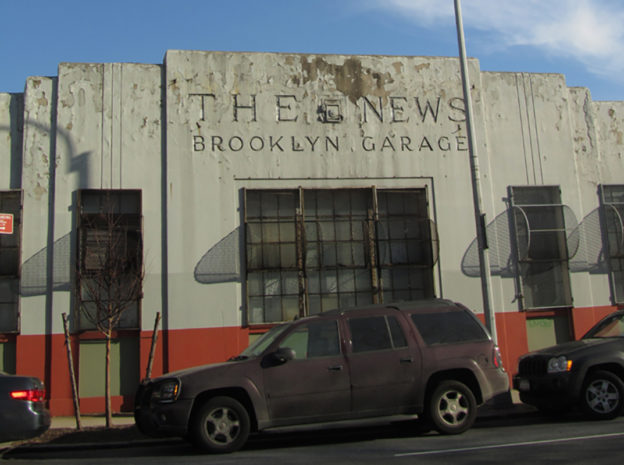
BROOKLYN NEWS BUILDING

209–215 3rd Avenue;
1919|

This building once functioned as the printing and distribution garage for the New York Daily News. The single story structure features vertical piers which break up the strong horizontal massing. The signage on the building reads “The News Brooklyn Garage” and features an image of a stylized camera. The News was once known as “New York’s Picture Newspaper” and continues to feature a camera as part of its logo to this day.

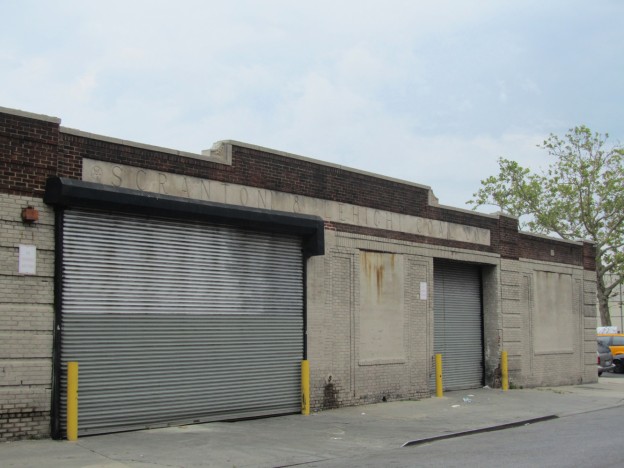
SCRANTON AND LEHIGH COAL COMPANY

233 Nevins Street/236 Butler Street;
Early 20th century|

This building survives as a relic of the once prolific commodity of coal shipment on the Gowanus Canal. According to a transcription from Brooklyn Genealogy, “Lehigh and Scranton coals have no rivals as powerful heat producers and sustain combustion in a manner that insures the greatest economy as household and manufacturing fuels.” See also the Burns Brothers Coal Pockets on 2nd Avenue.

R. G. DUN AND COMPANY BUILDING

239–57 Butler Street/206 Nevins Street;
1914|

This four story factory was commissioned by Robert Graham Dun and completed by the Moyer Engineering and Construction Company in 1914. This reinforced concrete structure features decorative, blue terra-cotta detailing which contrasts with the overall gray-colored concrete materiality. The printing industry faded from this building in the 1960s and the use shifted to the manufacturing of plastic products. Subsequently, the building remained vacant for many years but has recently been zoned for residential use.

ASPCA MEMORIAL BUILDING

233 Butler Street;
Renwick, Aspinwall & Tucker;
1913|

The American Society for the Prevention of Cruelty to Animals opened its Brooklyn headquarters here in 1913. The organization was formerly located in a basement at 114 Lawrence Street, and this building on Butler Street was the result of generous donations by wealthy philanthropists, including the Bowdoin and Schermerhorn families. When it was completed, it was larger than the Manhattan location and had a formal lobby and reception space. The roof design even included a terrace that functioned as a dog run. The ASPCA occupied this space until 1979, and the building has since been a musical-instrument repair shop.

GOWANUS/DOUGLASS STREET PUMPING HOUSE

209 Douglass Street;
1905–11|

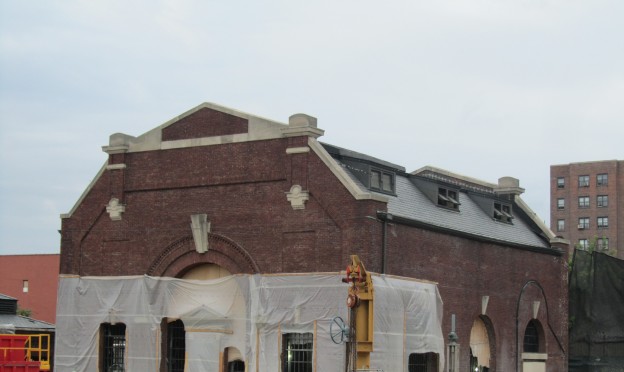
The pumping house was constructed as part of the flushing system of the canal. It is still in use today, and the exterior remains largely intact despite the removal and reconstruction of much of the original equipment during the 1990s.